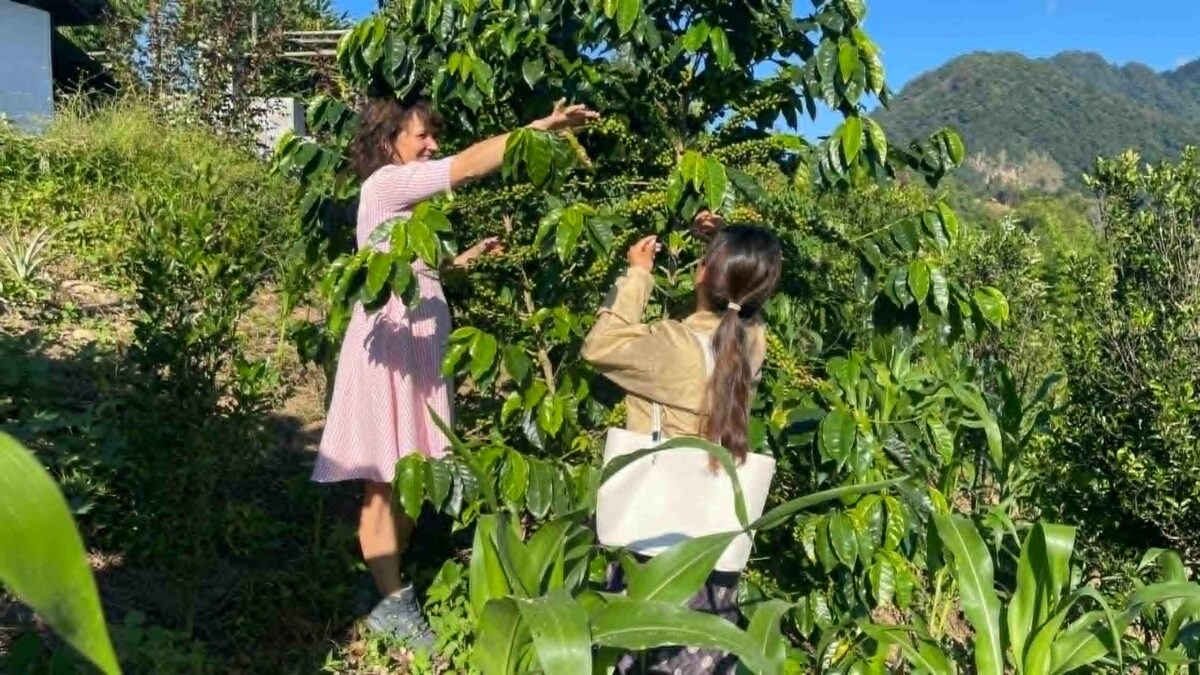

A new coffee origin in the Eastern Himalayas
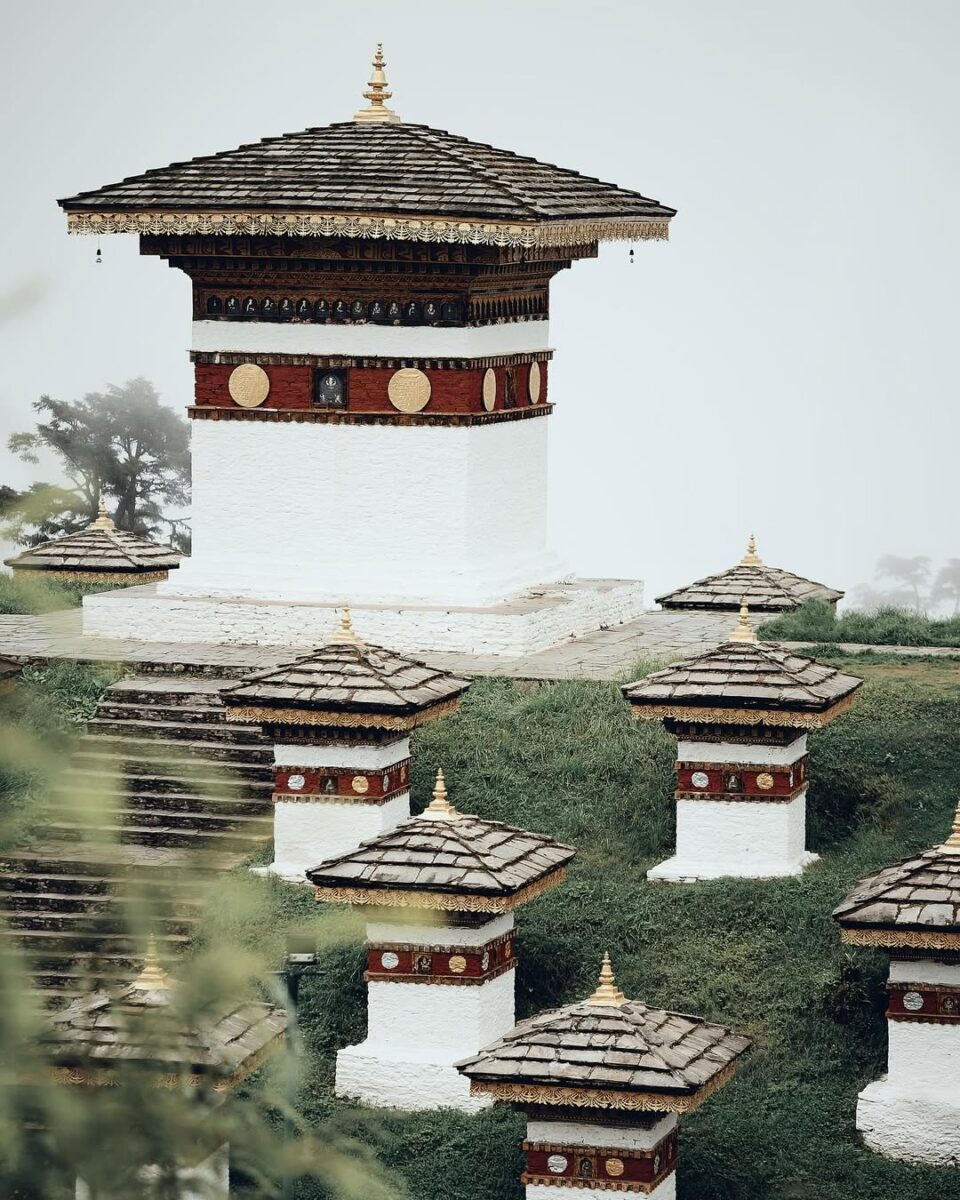
Bhutan, a Buddhist kingdom on the Himalayas’ eastern edge, is known for its monasteries, fortresses (or dzongs) and dramatic landscapes that range from subtropical plains to steep mountains and valleys. In the High Himalayas, peaks such as 7,326 meter Jomolhari are popular destinations.
While Bhutan is known for its mountains …it is not for growing coffee. But that is changing. Nathalie F. Manach shared this information after conducting a workshop in Bhutan, bringing her experience working with farmers in Myanmar with her company Nat Coffee Ltd.
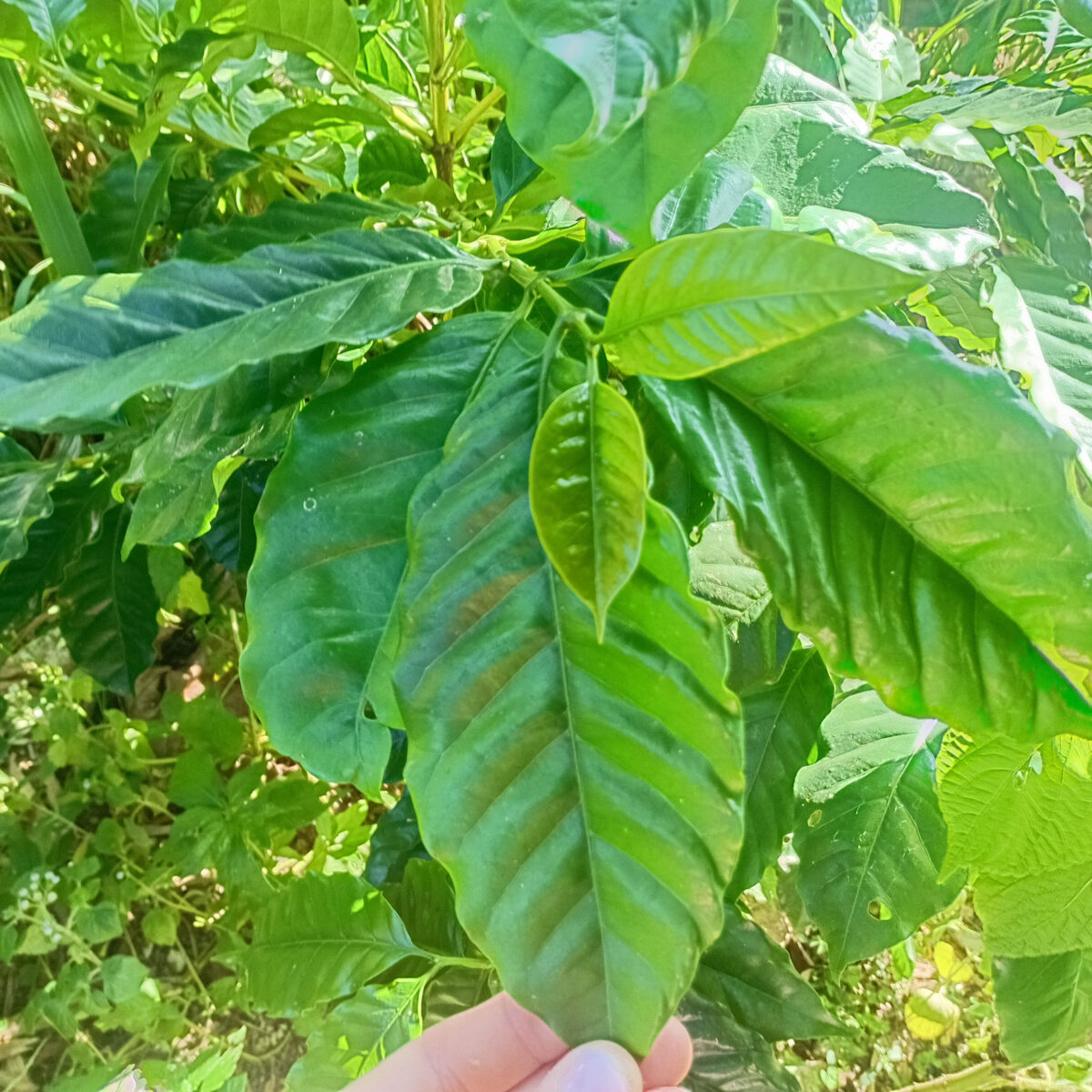
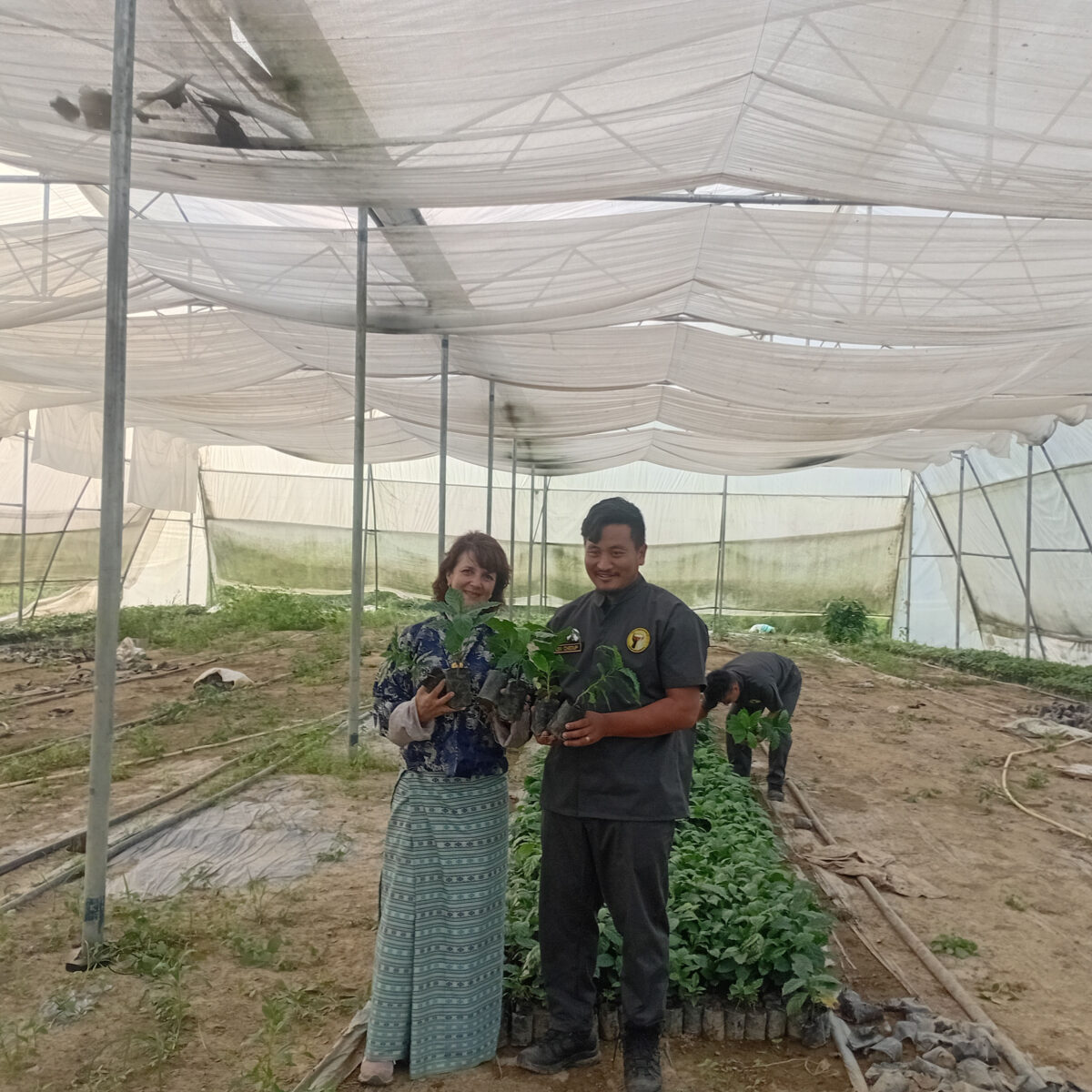
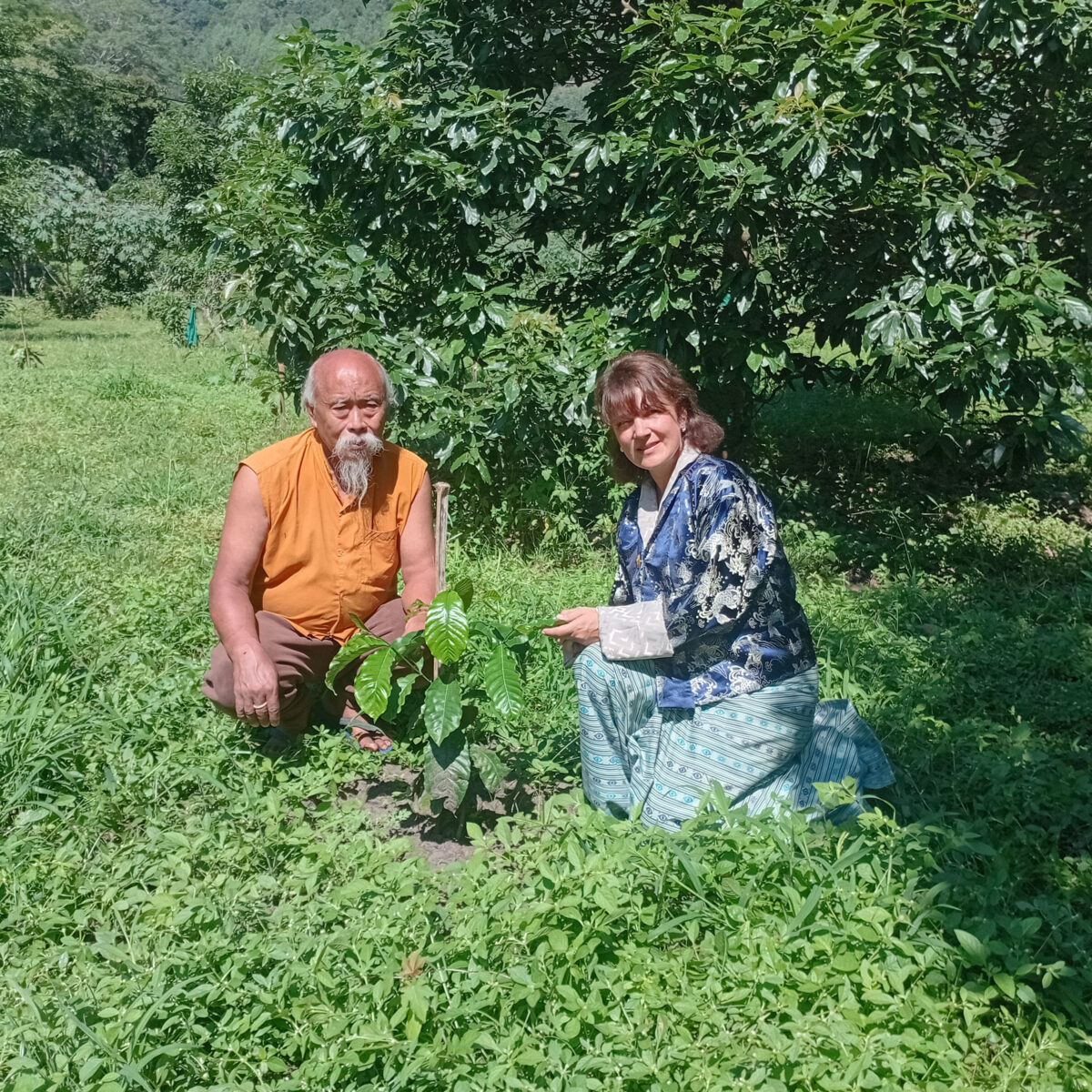
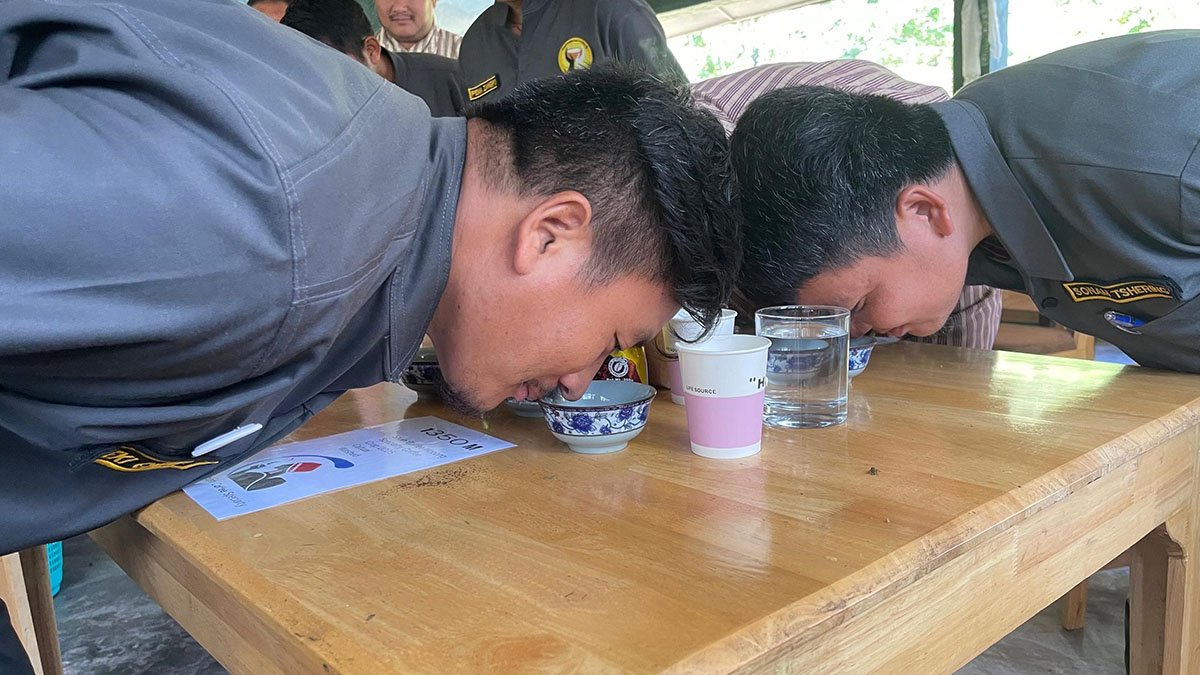
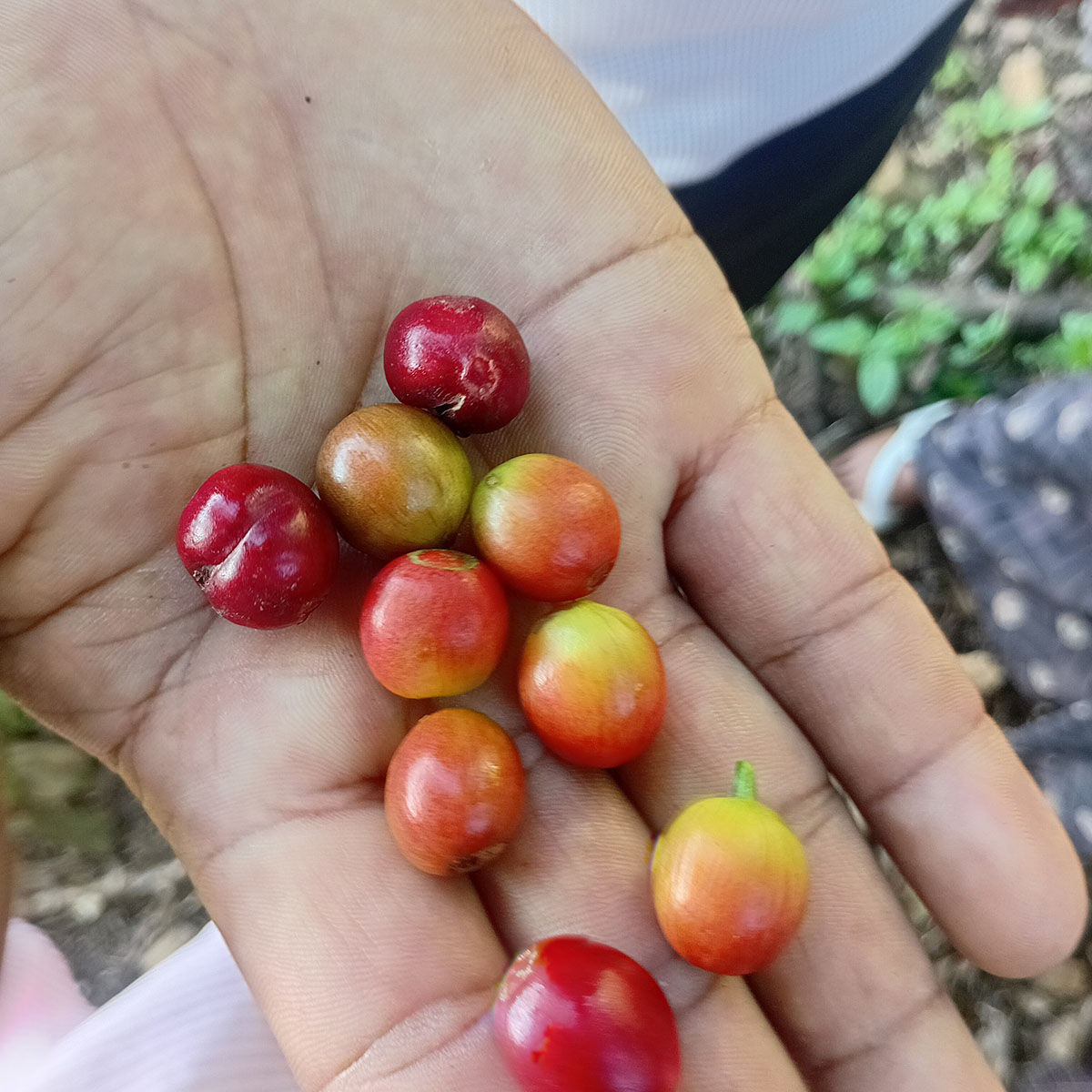
Coffee cultivation in Bhutan has gained increasing attention in some of the Districts of Bhutan as a high-value, climate-resilient crop that has potential to contribute to sustainable livelihoods, biodiversity conservation, and green enterprise development.
People rarely think of tropical places when associating Bhutan with climate. Drawing a temperature map, Bhutan is divided in 4 climatic zones:Alpine zone, subalpine zone, temperate zone and subtropical zone.
In 2024, Bhutan inaugurated its first plantation in Southern Bhutan, Zhemgang district. Five nurseries are engaged in supplying coffee seedlings, both ArabicaArabica refers to Coffea Arabica, the taxonomic species name of the genus responsible for around 75% of the worlds commercial coffee crop.: Arabica refers to Coffea Arabica, the... ...more and RobustaAteng is a common name for Catimor coffees widely planted in Sumatra and other Indonesia isles.: Ateng, with several subtypes, is a common name for Catimor coffees widely... ...more Coffee. The introduction of Arabica coffee goes back to an agricultural officer, called Dasho, who brought back the seeds from ColombiaColombian coffee is highly marketed and widely available in the US. They have been largely successful at equating the name Colombian Coffee with "Good" Coffee. This is half-true.... ...more and was posted in Panbang in 1987. He disseminated the coffee across Zhemgang district and linked the plants to the Panbang Youth Cooperative. Panbang Youth Cooperative was established in 2019 by the District Agricultural DepartmentA Department is the term used in some Latin American countries for a State or County. For example, Huila Department is the state in the South of Colombia. ...more.
In 2024, the cooperative comprising 17 members launched a project to produce seedlings, supported by the United Nations Development Program. Zhemgang Dzongkhag has a poverty rate of 41%. Coffee was identified as a lead crop by the local government to overcome the rural unemployment rate. First international market linkages have already been established.
Bhutan is covered 70% by forest and protected areas. Therefore the 5-year coffee program was initiated on fallow land. From 2024-2030 an accumulated 1500 acres of coffee is planted (80% Arabica, 20% RobustaRobusta usually refers to Coffea Robusta, responsible for roughly 25% of the world's commercial coffee. Taxonomy of Robusta is debated: some sources use “Robusta” to refer to any... ...more). Whilst
remaining an importing country for roasted and green coffeeGreen coffee refers to the processed seed of the coffee tree fruit. Coffee is a flowering shrub that produces fruit. The seeds of the fruit are processed, roasted,... ...more – most of the coffee beans come from IndiaS-795 is a variety based on the " S-Line" coffees of India, and stands for Selection 795, It has a very fine cup, one of the best in... ...more – Bhutans aiming at covering its own demand for coffee, and promises a significant jump. Called Bhutan Mountain Coffee, the first coffee shop was opened in the capital Thimphu in 2016. Since then, the coffee shop has opened 3 other branches. It is a popular place for tourists and expats to meet, while coffee remains to be ingrained in daily ritual and culture.
As a new originIn coffee talk, it refers to a coffee-producing region or country; such as, "I was just at origin." Of course "Origin" for most product we use is not... ...more, Bhutan does not yet have any policies or procedures in place to enable fluid marketing – not least pricing or grading systems – but with the governmental support and the willingness of the farmers, these things are changing quickly.
Bhutan Facts:
Capital: Thimphu
Currencies: Bhutanese Ngultrum, Indian Rupee
Population: 791,524 (2024)
Official language: Dzongkha
King: Jigme Khesar Namgyel Wangchuck
If you would like more information you can reach Nathalie directly [email protected]