
Aug. 1, 2013
So we are at it again, making cold brew coffee a few different ways and tasting it to see how different brewing methods affect coffee flavors. During tasting sessions, we all had our opinions but there hasn’t been much science involved so out came the refractometer. A refractomenter is a device used by beverage and produce professionals to determine what percentage of solubles are in a solution. For example, a cup of coffee is mostly water with very tiny bits of ground coffee beans floating in it. A refractometer is able to tell us exactly how much coffee is in that water.
The refractometer: kinda like a microscope that looks through a mini-sunroof
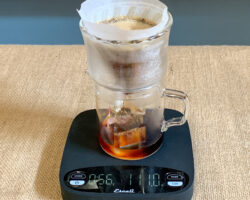
We used a medium grind ColombiaColombian coffee is highly marketed and widely available in the US. They have been largely successful at equating the name Colombian Coffee with "Good" Coffee. This is half-true.... ...more Pedregal which is similar to our current offering of Colombia Huila Bruselas or a lot of our Brazil offerings. It was fun and informative comparing the DIY AeropressA portable coffee brewer that makes a unique dense brew, somewhat similar to an Americano.: The Aeropress looks like a giant syringe: coffee grounds are in the bottom,... ...more method (recipe found on Prima Coffee’s blog), a Yama drip tower and a Chemex brewed into ice (found on Prima’s blog as well). The Aeropress and the drip tower methods are both ways to get a concentrated extractionRefers to the process of infusing coffee with hot water. Hot water releases or "extracts" the flavor from the roasted, ground coffee. The term is used mostly with... ...more and the chemex method (which isn’t technically a cold brew) is a way to get a perfectly extracted cup using a bypass-brew, similar to how we like to add hot water to our cup after brewing with an Aeropress.
We brewed, we tasted and we tested. Here’s what we found…
The Aeropress and the drip tower gave us expected results. Both of these methods resulted in a heavy, syrupy bodyAssociated with and sensed by mouthfeel, body is sense of weight and thickness of the brew, caused by the percentage of soluble solids in the cup, including all... ...more without any harsh, offensive notes that you would expect from a concentrated coffee. We tasted a lot of sweetnessSweetness is an important positive quality in fine coffees, and is one of five basic tastes: Sour, Sweet, Salty, Bitter, Savory (Umami). In coffee, sweetness is a highly... ...more with wine-like chocolateA general flavor or aroma term reminiscent of chocolate. But what type? Usually described with more specifics.: Chocolate is a broad, general flavor or aroma term reminiscent of... ...more notes. Someone even tasted pralines and ice cream flavors. The Chemex result was very different due to it producing a proper extraction. There wasn’t a lot of sweetness up front and the wine/chocolate notes were replaced by those of toasted nuts.
In the end, taste matters most but we were curious to see exactly how extracted these coffees were. The Aeropress brew scored a 2 on the refractometer which tells us the extraction is about 30% (off the chart). The Yama tower registered a reading of about 30% as well. The Chemex gave us a score of 1.35 which translates to 20%. When looking at the Universal Brewing Control Chart, 20% is exactly what the SCAA (Specialty CoffeeSpecialty coffee was a term devised to mean higher levels of green coffee quality than average "industrial coffee" or "commercial coffee". At this point, the term is of... ...more Association of America) recommends as an optimum extraction.
Here’s the view through a refractometer without any liquid on the glass.
Here’s the view with some coffee on the glass. The separation between the light and dark areas is the reading for extraction levels. Pardon the distorted photo. It’s hard to take pictures through a refractometer eyepiece.
The universal brewing control chart
Tasting and scoring the results.
What’s the conclusion? It’s hard to say. We feel cold coffee, especially concentrate is so different from hot coffee that it’s in a world of it’s own and brewing it has no rules. Sometimes, it’s not even coffee…well it is…but…well, you get the point. Have fun experimenting, create your own recipes, use good coffee, stay cool and share it with your friends and fam.