

Our Liquid Amber espresso has lots of body and crema. Why?
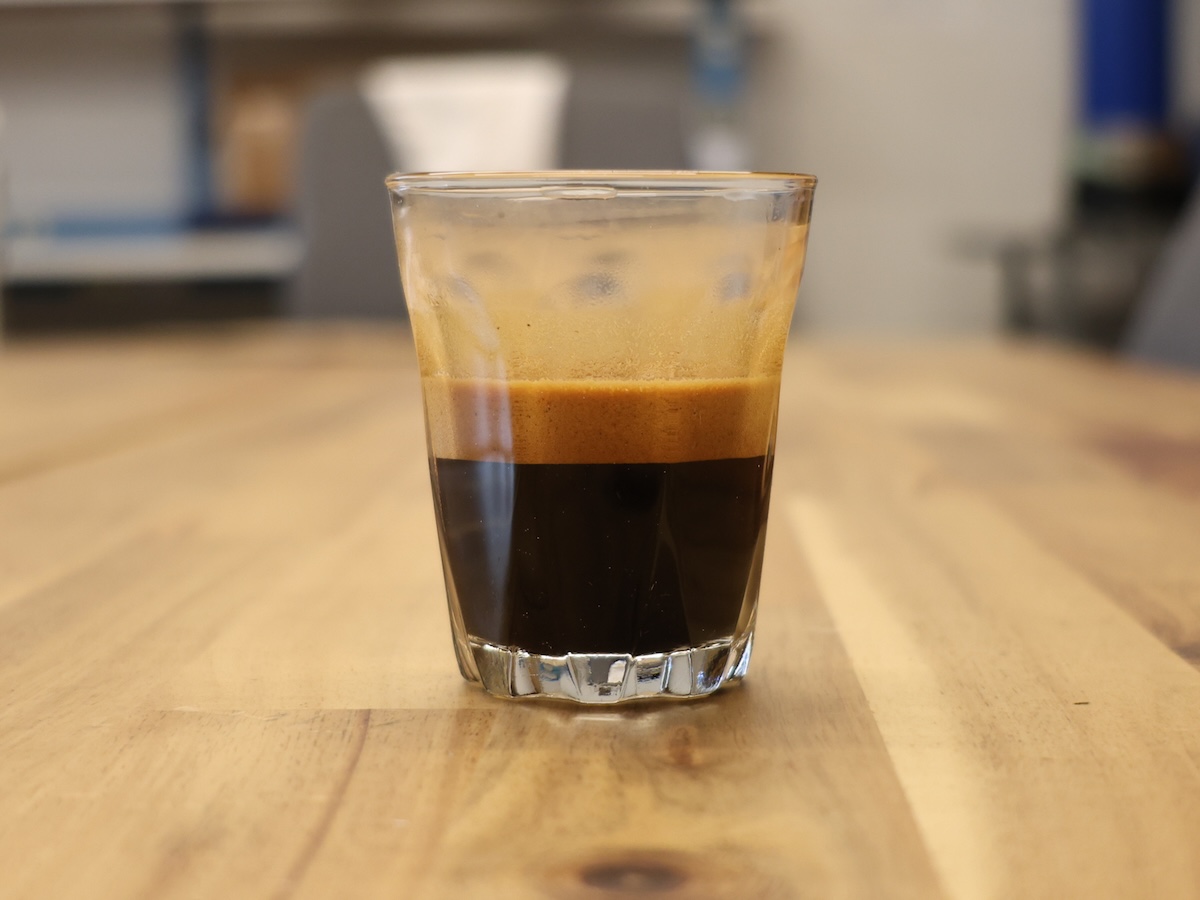
We recently got a question about the impact of specific green coffees and roast level on cremaCrema is a dense foam that floats on top of a shot of espresso. It ranges in color from blond to reddish-brown to black. Blond crema may be... ...more. There are a lot of factors at play, but the short answer is that the green coffeeGreen coffee refers to the processed seed of the coffee tree fruit. Coffee is a flowering shrub that produces fruit. The seeds of the fruit are processed, roasted,... ...more, degree of roastDegree of Roast simply means the roast level of a coffee, how dark it has been roasted.: Degree of Roast simply means the roast level of a coffee,... ...more and age of roast all make a big impact.
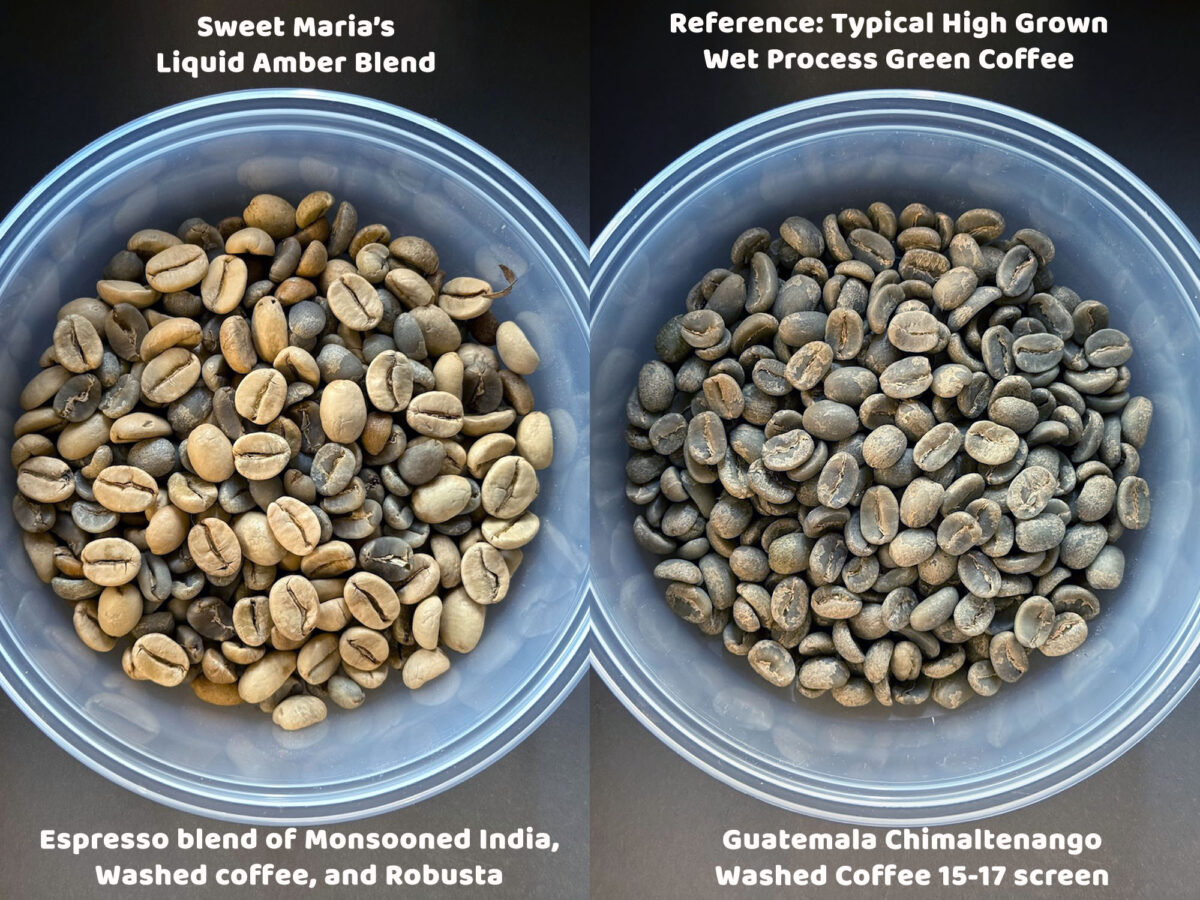
Among our espressoA small coffee beverage, about 20 ml, prepared on an espresso machine where pressurized hot water extracted through compressed coffee.: In its most stripped-down, basic form, this is... ...more blends, Liquid Amber is the definitive crema bomb. This is thanks in part to the inclusion of IndiaS-795 is a variety based on the " S-Line" coffees of India, and stands for Selection 795, It has a very fine cup, one of the best in... ...more Monsoon Malabar and a small percentage of robustaAteng is a common name for Catimor coffees widely planted in Sumatra and other Indonesia isles.: Ateng, with several subtypes, is a common name for Catimor coffees widely... ...more in the blend. They imbue Liquid Amber with the power to produce a ton of crema (and have a lot of bodyAssociated with and sensed by mouthfeel, body is sense of weight and thickness of the brew, caused by the percentage of soluble solids in the cup, including all... ...more).
In general, we tend to find that moderate altitude coffees, like the ones you might find in BrazilBrazil is a coffee giant . As Frank Sinatra sang, "they grow an awful lot of coffee in Brazil".: Brazil is a coffee giant . As Frank Sinatra... ...more, natural (also known as dry processDry process coffee is a method for taking the fruit from the tree to an exportable green bean. The whole intact coffee cherry is dried in the sun... ...more) coffees, and aged or monsooned coffee (like the Monsoon Malabar) consistently produce espresso with higher than average crema.
India Monsooned Is a Soft Coffee… What Does That Mean?
In the coffee trade, lower-grown coffees used to be called “soft coffees,” and high grownHigh Grown, or HG, is a coffee designation that can mean different things in different countries. : High Grown, or HG, is the highest quality Mexican coffee designation... ...more ones were called “hard bean” coffees. While it seems like odd terminology, there’s a sound basis for it. Bean densityThe density of a coffee bean is often taken as a sign of quality, as a more dense bean will roast more with a better dynamic. The density... ...more is less when grown at lower altitudes generally, as the coffee seeds develops faster.
It’s analogous to dense hardwood trees that mature slowly, versus rapidly-growing soft wood varieties. With coffee (or wood), the cellular matrix of a low-grown or low density type does has fewer cellular “pockets” for the same amount of area as a hard, compact cellular matrix.
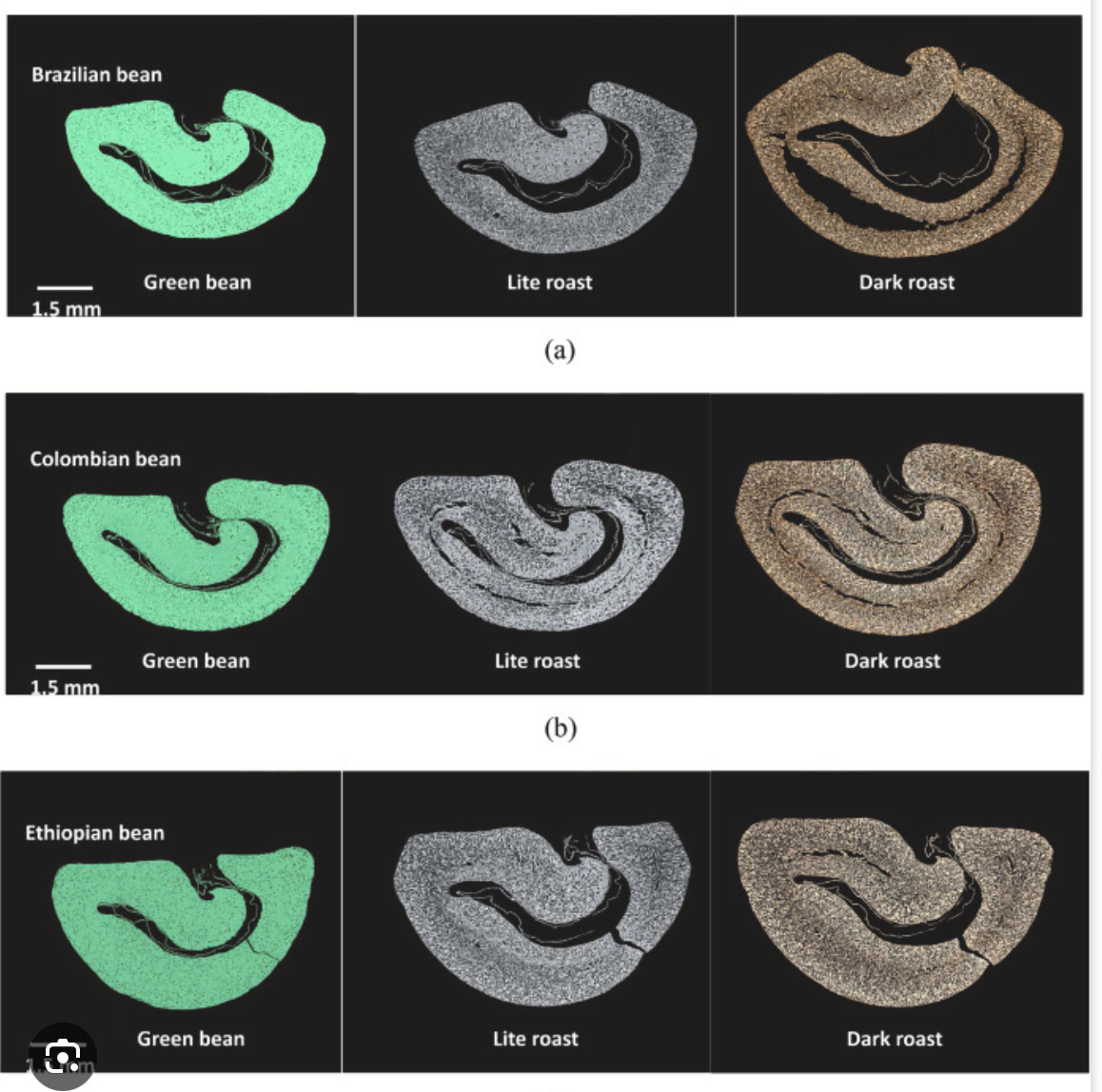
When softer coffee is roasted, the cellar matrix fractures easier, and more complete, that dense beans. When ground, the water permeates easier through this more porous, fractured material (i.e. the ground coffee), resulting in higher levels of extractionRefers to the process of infusing coffee with hot water. Hot water releases or "extracts" the flavor from the roasted, ground coffee. The term is used mostly with... ...more. This includes insoluble solids that are suspended in liquid which help form more crema, and a high-handed sense of mouthfeelHow a coffee feels in the mouth or its apparent texture, a tactile sensation : A major component in the flavor profile of a coffee, it is a... ...more or “thickness.”
Lower grown coffee expands quite differently in roasting too, and the expansion allows for more extraction in brewing. Below is an image of Brazil (representing lower grown coffee, with many farms at 850–1000 meters), ColombiaColombian coffee is highly marketed and widely available in the US. They have been largely successful at equating the name Colombian Coffee with "Good" Coffee. This is half-true.... ...more (medium to high altitude, 1400–1600 meters) and EthiopiaEthiopia, formerly known as Abyssinia, or a coffee cultivar: Ethiopia, or more specifically the Empire under Haile Selassie, was known as Abyssinia. The name is Latin, derived from... ...more (very high altitudes, 1800–2100 meters). You can see the bean size increase in form, but also in volume with the softer Brazil coffee. Our Indian Monsooned will be even softer due to the monsooning process!
Light Roast or Dark Roast: It Makes a Big Difference
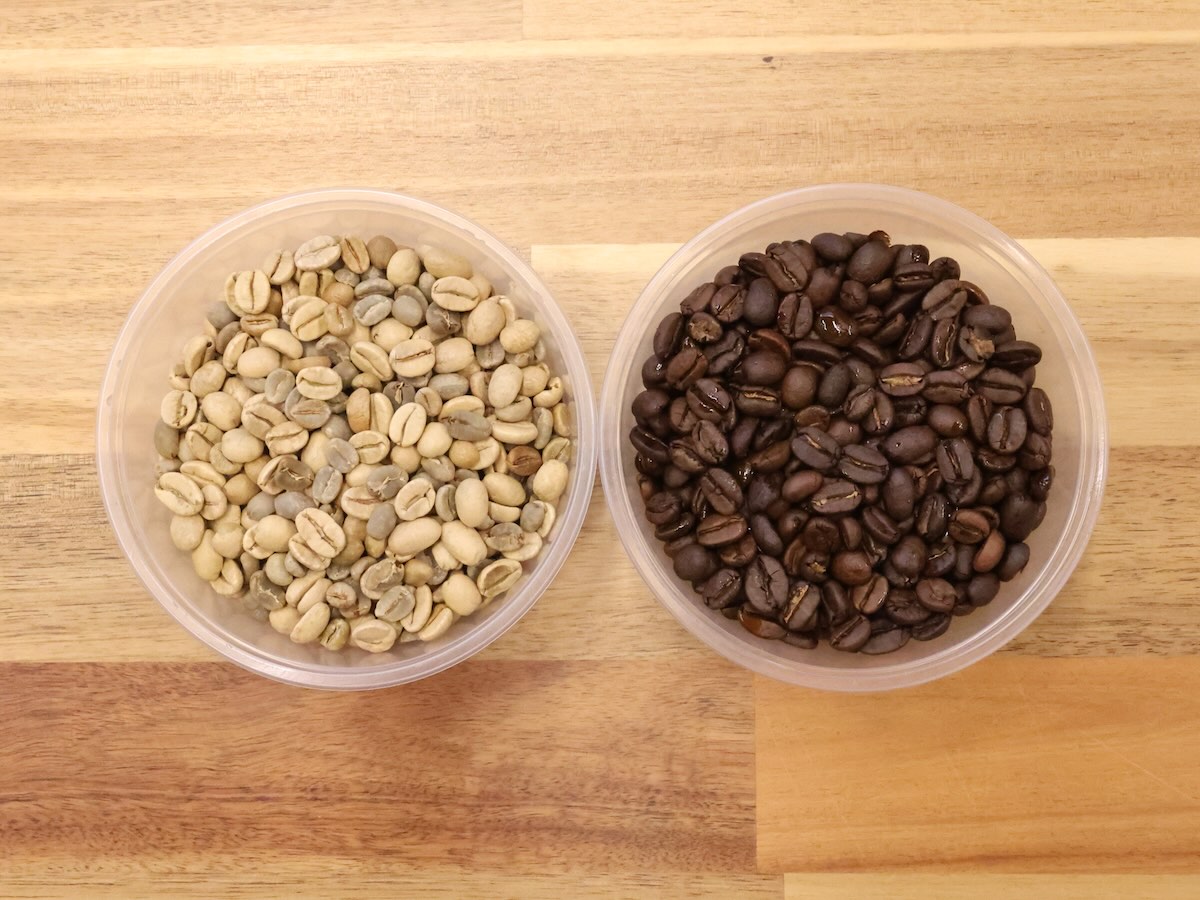
Roast level matters too. Somewhere around Full City+City+ roast is an ideal roast level that occurs roughly between 425 and 435 degrees Fahrenheit in many coffee roasters with a responsive bean probe where First Crack... ...more with just a few snaps of second crackAfter First Crack, a roast reaction around 440 to 450 degrees that is distinguished by a snapping sound. Second Crack is the second audible clue the roaster-operator receives... ...more seems to be the sweet spot for us. If you take a look at the photos of this Liquid Amber roast, you’ll see that oils have just started to migrate to the surface of the beans.
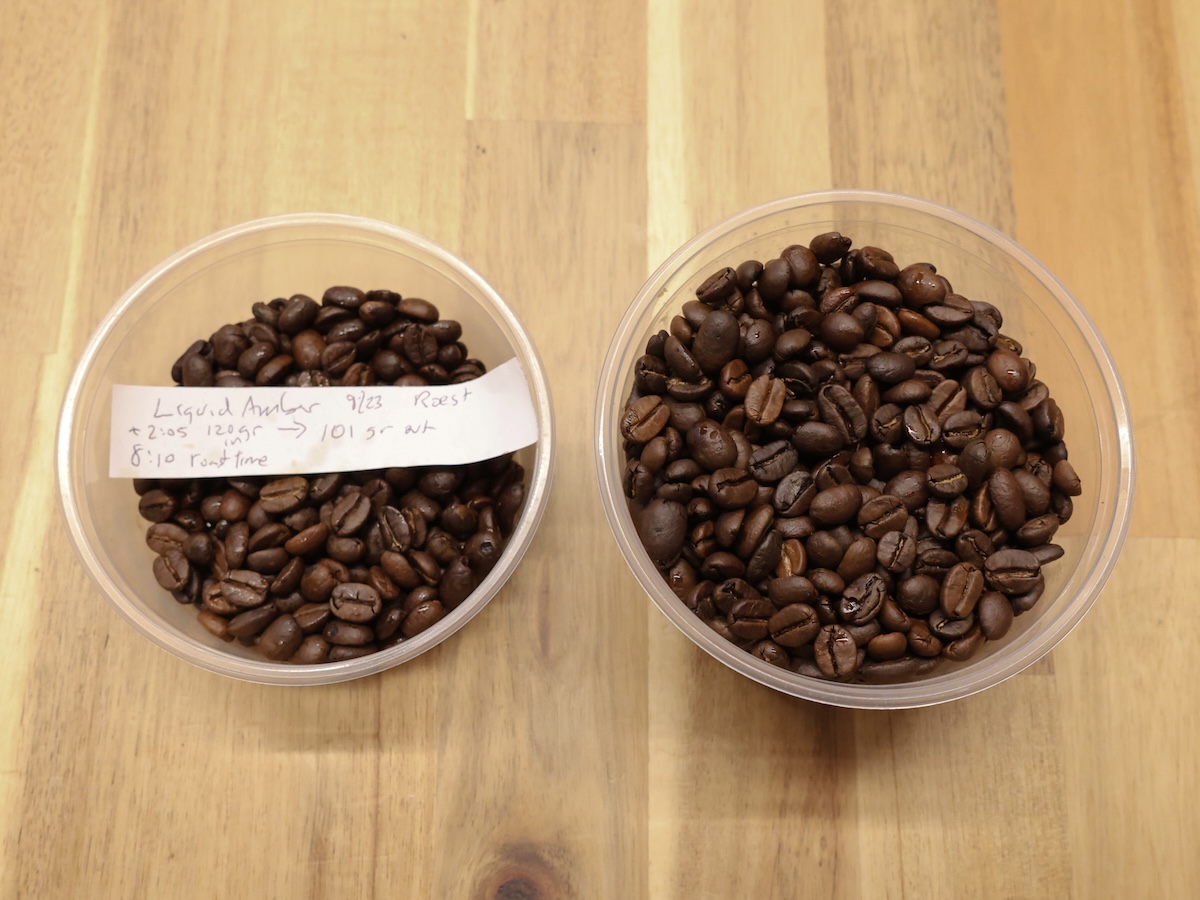
Finally, we come to age of roast. This refers to how long roasted coffee has been rested. A fresher roast will produce more crema (or at least look like it is). But too fresh and you may end up with a foamy shot that is mostly CO2. If the coffee has not had enough time to degas, it extracts into the shot itself. Right around day 3 to 4 seems to be better timing. The coffee has had some time to degas, enough for the extraction to still produce a thick crema. These shots were pulled 5 days off roast and the pictures speak for themselves.
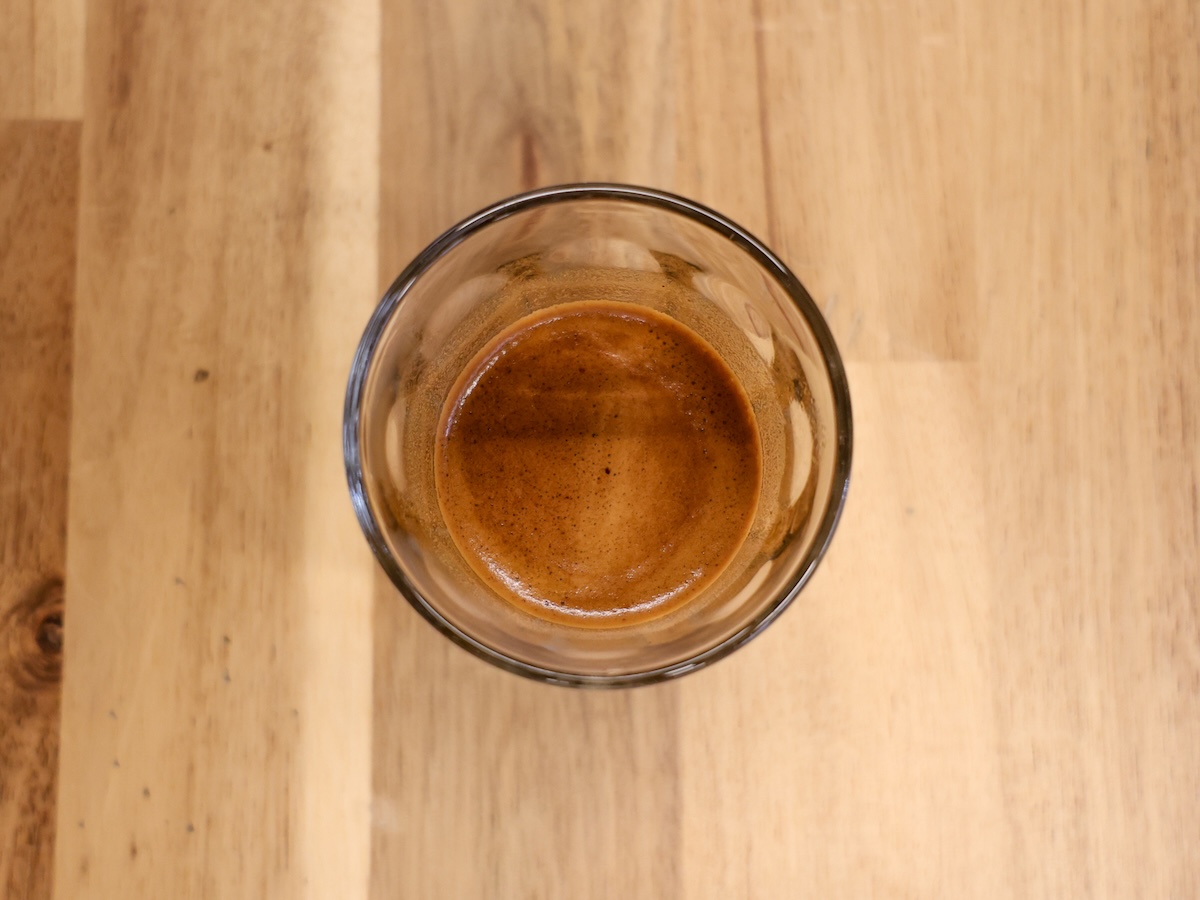
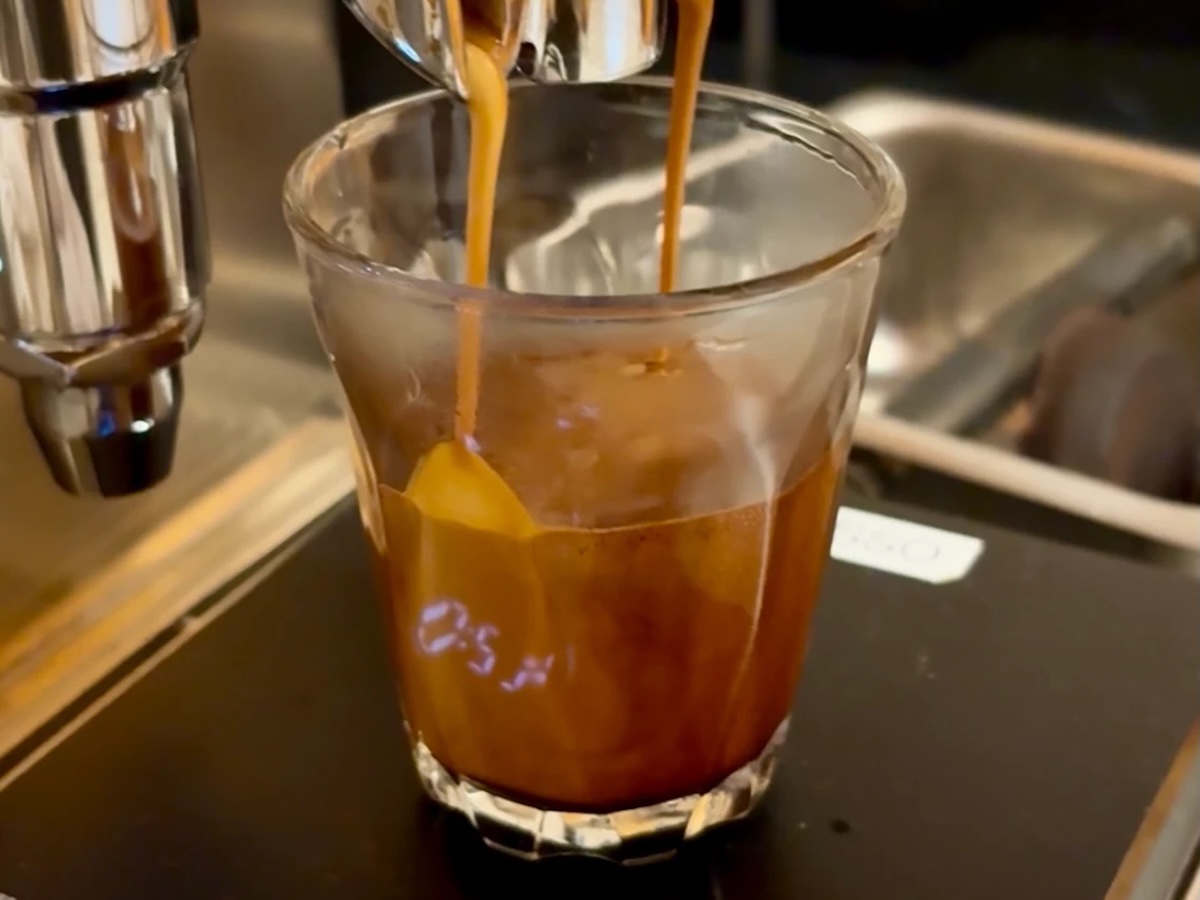
We know, crema isn’t the end-all, be-all of espresso. These days, many people even find it borderline undesirable! But if you’re a fan of milk drinks and you’re looking for a traditional high bitterness, high crema, high body shot with lots of mottling, Liquid Amber is where we’d start.
Roasting Specs
Roaster: ROEST L100 Plus
Roasted to 15.8% weight loss with oil just starting to come to the surface. Full City+ with a few snaps of second crackAn audible popping sound heard during roasting. In coffee, one refers to "first crack" and "second crack," which come from two different classes of chemical reactions.: An audible... ...more.
120 g in, 101 g out.
First crackFirst crack in one of two distinct heat-induced pyrolytic reactions in coffee. It is distinguished by a cracking or popping sound in the coffee, and occurs between 390... ...more in 6:10 with 2 minute development time for a total roast time of 8:10.
Brewing Specs
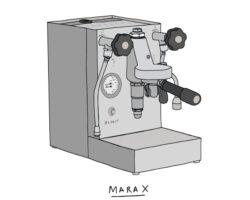
Using the Lelit Mara X Espresso Machine set to High Temp, X-Mode Coffee.
20 g in, 40 g out in 32 seconds.
Shop Liquid Amber on Sweet Maria’s and Coffee Shrub, or check out our other blends (on Sweet Maria’s and Shrub).
5 Responses
Ooh ooh ooh
I’ve been pulling this blend on my flair pro 3 and even ~9 days off the roast it’s got a great amount of crema and the taste/body combo is fantastic! Some of the best shots I’ve had on the set up thus far.
Hey Paul, glad you’re enjoying it. We found the same thing when we were making a lot of Liquid Amber day after day while working on the post. It has a really good “shelf life” which we think is a really attractive characteristic for home roasters that might only roast every week or two.
I’ve read that some Italian roasters roast their Robusta separately so that they can age it much longer, (10-30 days!) than the other components of their blends for espresso. Is this true? Might you have advice for roasting just Robusta?
Hey Ian, can’t really say we know much about how they do it in Italy. We roast Liquid Amber with the green coffee pre-blended with a lot of success both on our home roasters and on our Probat L12. We’re really happy with how it tastes, so why add an extra step? At least that’s how we approach roasting. We normally roast Robusta on the darker side, so if roasting on it’s own we’d definitely recommend Full City+ and above. We have a pretty through page about Robusta here that’s worth checking out: https://library.sweetmarias.com/robusta-coffee-overview/