

Taking a brief detour from coffee roasting to address a common question.
Has the thought ever crossed your mind that maybe your coffee roasterA machine for roasting coffee. Or the person operating it! The basic requirements for a coffee roaster are a heating element that gets suitably hot and a mechanism... ...more could be used to roast something other than coffee? It’s a common idea that we often see come through our customer service inbox, and it’s generally things like cacao, nuts, or seeds in which our customers seem most interested. Our response to this sort of inquiry has rarely been more than a simple, “I don’t know!” That’s the truth after all, and for the most part we really try to stick to what we know best. Coffee is and has always been our focus, so we haven’t spent much time exploring what else our coffee roasters are capable of. That said, we do understand where the inspiration for this question comes from, and we’d be lying if we said we weren’t curious ourselves.
Unsurprisingly, home coffee roasters are specifically designed to roast green coffeeGreen coffee refers to the processed seed of the coffee tree fruit. Coffee is a flowering shrub that produces fruit. The seeds of the fruit are processed, roasted,... ...more, so naturally that’s what we use them for. But when you think about it… popcorn poppers were originally designed to pop popcorn, and look at how we use them now! They’re essentially a staple for home coffee roasters these days, especially for newcomers looking for a simple and affordable way to get started. All it took was one curious mind to test the idea of roasting coffee on a popcorn popper to completely shape the home roasting scene. Something else that comes to mind is how the BehmorA popular electric drum roaster designed for home use, with variable batch sizes (from 1/4 pound to 1 pound) and a smoke-reduction system. It has been modified and... ...more, a machine designed specifically to roast coffee, is actually a great option for roasting Cacao at home (that’s a topic we have a bit of experience with!). Jumping over to brewing equipment, the Mahlkonig EK43 is a popular commercial grinder that really helped to shape the modern coffee scene, yet its original purpose was for processingThe removal of the cherry and parchment from the coffee seed.: Coffee is either wet-processed (also called washed or wet-milled) or dry-processed (also called wild, natural or natural... ...more spices and grains.
With all of this in mind, surely there is some unrealized potential hidden within coffee roastingThe application of heat to green coffee seeds (beans) to create palatable material for brewing a great cup!: Coffee roasting is a chemical process induced by heat, by... ...more machines that is just waiting to be discovered. Can they be used to roast walnuts? Pumpkin seeds? Marshmallows?
What about tea…? Can the Gene Cafe roast tea leaves? Are we on the tails of a great new discovery?
Spoiler—No, Not really.
How It All Began
I should clarify that the titular question at the head of this article didn’t originate from my own curiosity. We actually received a customer email, similar to the kind I described earlier, that served as the source of inspiration. The sender was Lisa (not her real name), and she was particularly curious if roasting green tea on a Gene Cafe CBR-101 would be feasible. Lisa works for a US-based tea company that roasts small batches of their green tea in house. She’s in the market for an alternative to the roasting machine she currently uses, and her searching lead her to Sweet Maria’s where she took interest in the Gene Cafe. At the time of her inquiry, I didn’t have the knowledge or experience to give her an informed answer, but something about the idea peaked my curiosity. I offered to perform a roast and test the idea so long as she could supply the tea leaves. To my delight, she agreed, and a few days later a package with 200g of Bancha green tea showed up at my doorstep.
Houjicha
I’m sure most of us are familiar with green tea and the range of flavors it can offer. In my experience, it’s often grassyGreenish flavor in the cup, usually indicating early crop, unrested coffee.: Greenish flavor in the cup, usually indicating early crop, unrested coffee. This is a fresh cut grass... ...more, vegetal, sweet, and clean (sometimes there’s a hint of tropical fruit as well, like pineapple). However, roasting the tea leaves prior to brewing completely transforms the tea, imparting nuttyNutty is a broad flavor term, reminiscent of nuts ... but what kind exactly?: Nutty is a broad flavor term, reminiscent of nuts. It is tied intrinsically to... ...more, toasty, and bittersweetBittersweet is from the language of chocolate, and describes the co-presence of positive bittering compounds balanced by sweetness. It is directly related to caramelization, but has inputs from... ...more qualities to the aromaAroma refers to sensations perceived by the olfactory bulb and conveyed to the brain; whether through the nose or "retro-nasally": The aromatics of a coffee greatly influence its... ...more and flavor. Similar to the color changes one would expect from roasting coffee, the pale green tea leaves slowly shift toward a rich brown color as a roast progresses.
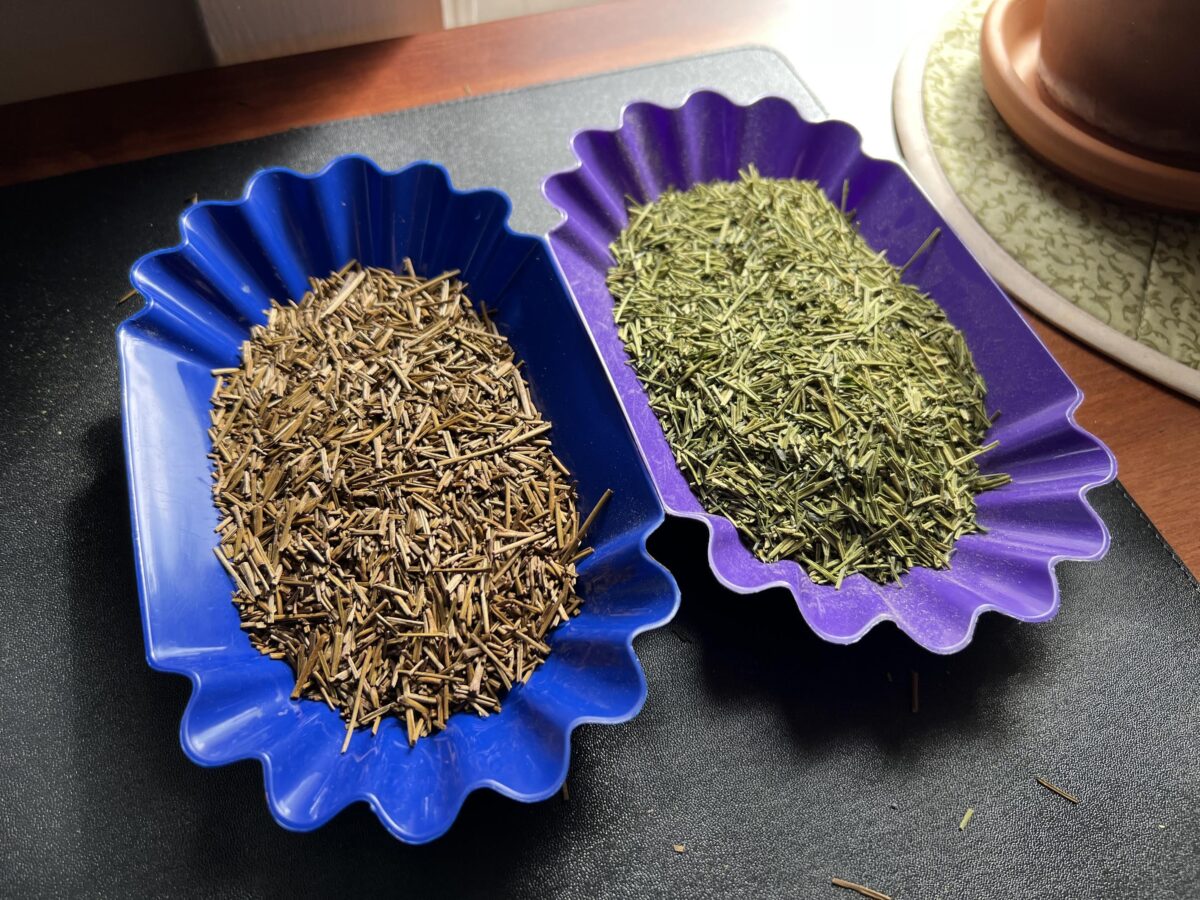
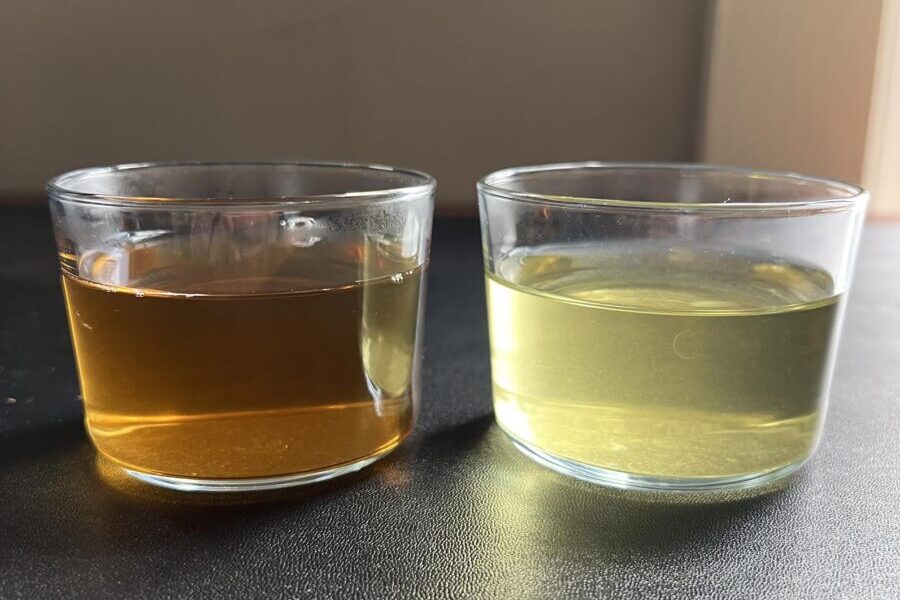
This practice of roasting green tea originates from Japan, and the roasted tea itself is called “Houjicha”. Paired with the fact that it has lower caffeineAn alkaloidal compound that has a physiological effect on humans, and a bittering taste. It is found throughout the coffee plant but is more concentrated in the seed... ...more levels than un-roasted green tea and is said to promote digestion, it’s common to consume as a hot beverage just after dinner or before bed. In a way, it’s almost like a non-alcoholic digestif.
Side note—To be clear, my tea knowledge and palate are both extremely limited. I do drink and enjoy tea often, but it’s not something I’d say I’m passionate about. I went into this whole experiment pretty much blind, save for the guidance and reading materials provided by Lisa. My goal is simply to share what I’ve learned, document what I did, and explain what worked and what didn’t.
Challenges, Considerations, and Preparations
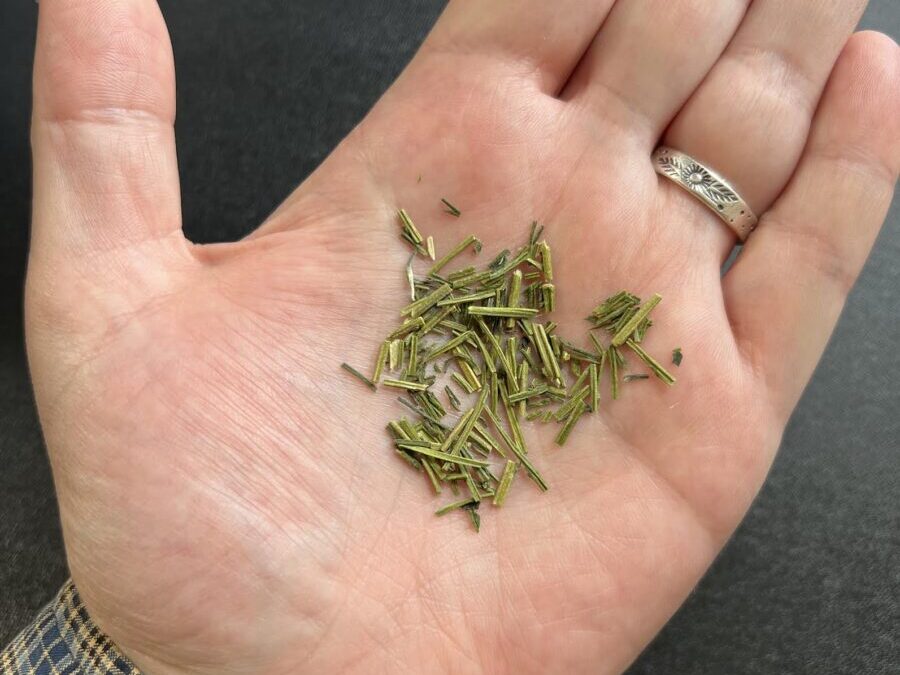
When talking with Lisa and preparing to roast the Bancha tea I received, I was made aware of some of the challenges with roasting tea, and it became clear why the Gene Cafe was in the spotlight. The main challenge seemed to stem from the shape, size, and weight of the individual leaves. The Bancha tea leaves I received were similar in appearance to pine needles, only stubbier and flatter with lengthwise edges that curled inward. This meant that a roaster with a perforated or wire-mesh drum was essentially out of the question, otherwise there would be a high risk of tea leaves exiting the chamber mid-roast.
Then there are vertical column air roasters, like Popper* or the Fresh Roast machines, which utilize strong air currents to transfer heat and give motion to your batch. This works great for dense green coffee, but I suspected it wouldn’t translate well to roasting something as lightweight as tea leaves. So traditional air roasters were off the table, too.
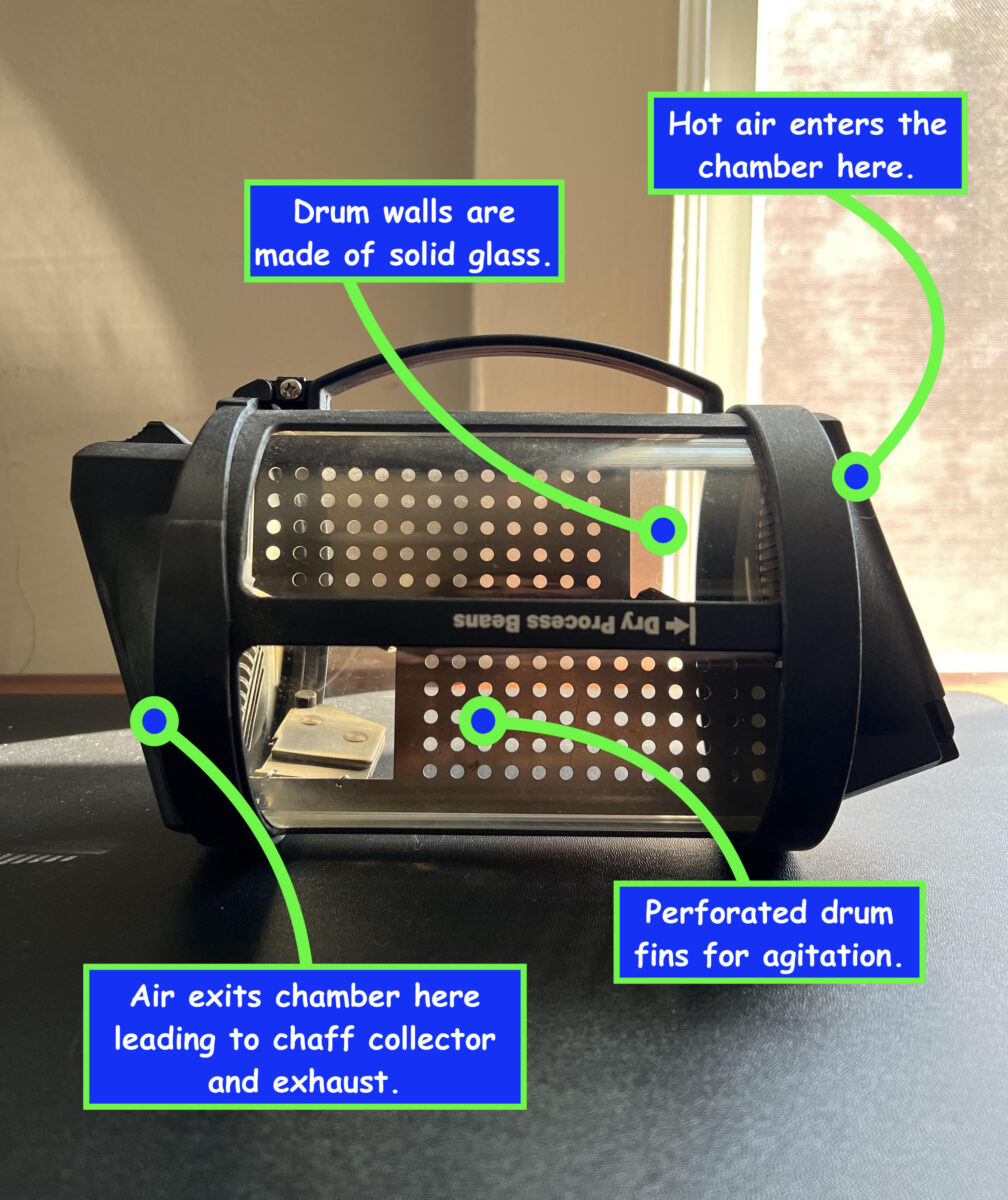
That’s where the Gene Cafe comes in. On the surface, the CBR-101 was a promising option for roasting tea thanks to its unique hybrid of a drum and air roasting. The drum walls on the Gene Cafe are not perforated, and instead are made of solid glass. Additionally, while the Gene Cafe does use hot air to transfer heat, my impression was that its air current wasn’t all that strong, and it likely wouldn’t be enough to move, lift, or over-agitate the tea leaves. It seemed like the Gene Cafe would be able to keep the tea leaves fully contained throughout the roast process.
Things were looking up, but there was one final consideration that was on my mind: the risk of fire. It’s actually a big reason why we hesitate to encourage our customers to experiment like this. There’s just no way of telling how things will play out when venturing into uncharted territory like this, and often it’s best not to play with fire. I wanted to be as prepared for this possibility as I reasonably could. So, I read through the CBR-101 manual again to refresh my memory on all the safety protocols, I stored a spray bottle filled with water within reach, and I had a can of “EZ Fire Spray” on hand in case of an emergency. Overkill? Maybe. In the end, I didn’t end up starting a fire, but the level of comfort these preparations provided for me was invaluable. Always good to be prepared, anyway.
A Wrench In The Works
After measuring out 200g of Bancha and attempting to load it into the Gene Cafe’s roasting chamber, I ran into the first real issue and sign of what was to come. Due to the unique design of the Gene Cafe’s drum, which rotates on an off-axis, you’re meant to load it with coffee while it’s mounted on a stand in a vertical position. Not usually a problem for coffee—In fact, this is something I really appreciate about the Gene Cafe’s design. Here’s the issue: When the drum stands vertically, the inlet grate (normally positioned on the right side of the drum) acts as the floor for whatever you are loading. Again, totally fine for coffee since 99% of beans are too large to get past the spacing between the grate’s bars. When I poured in the Bancha leaves, however, the result was that a fair amount of it passed straight through the grate at the bottom and accumulated on my desk.
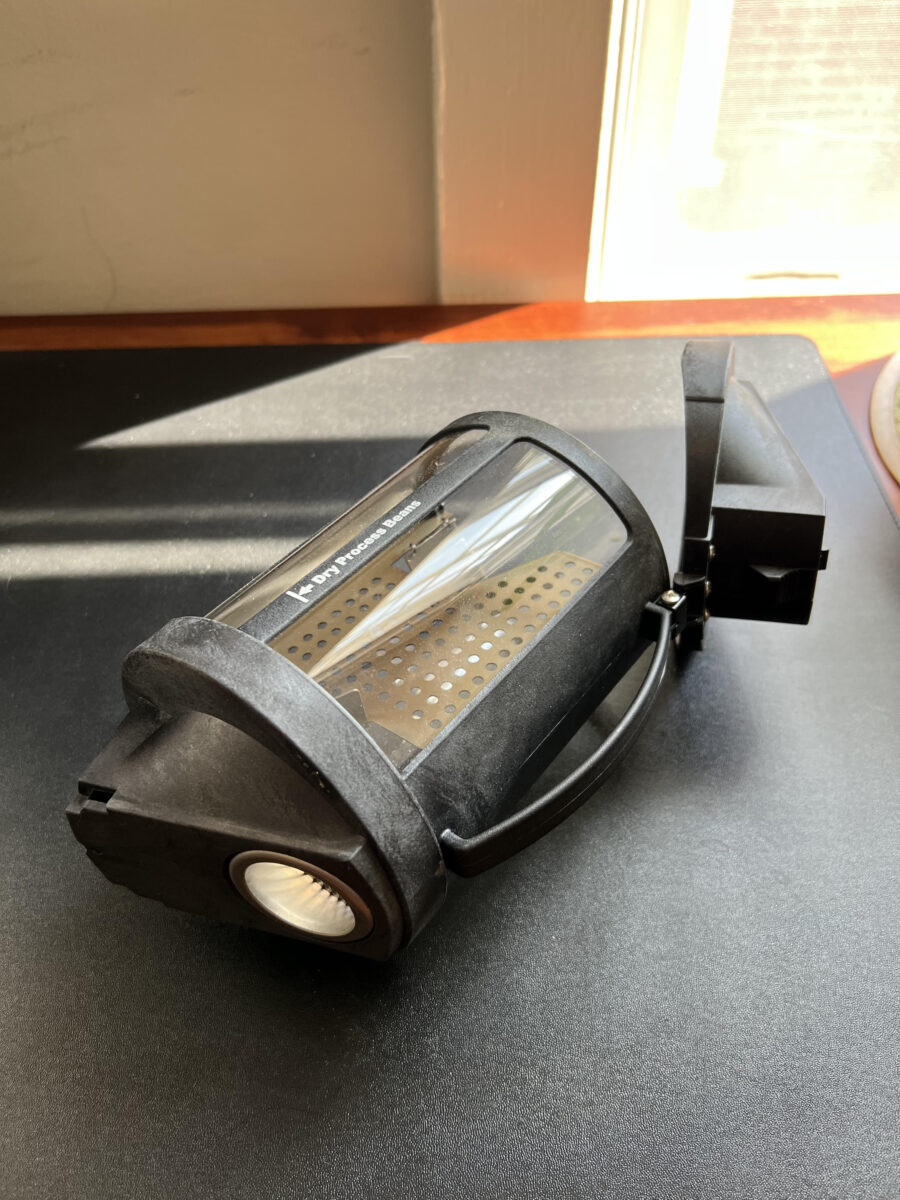
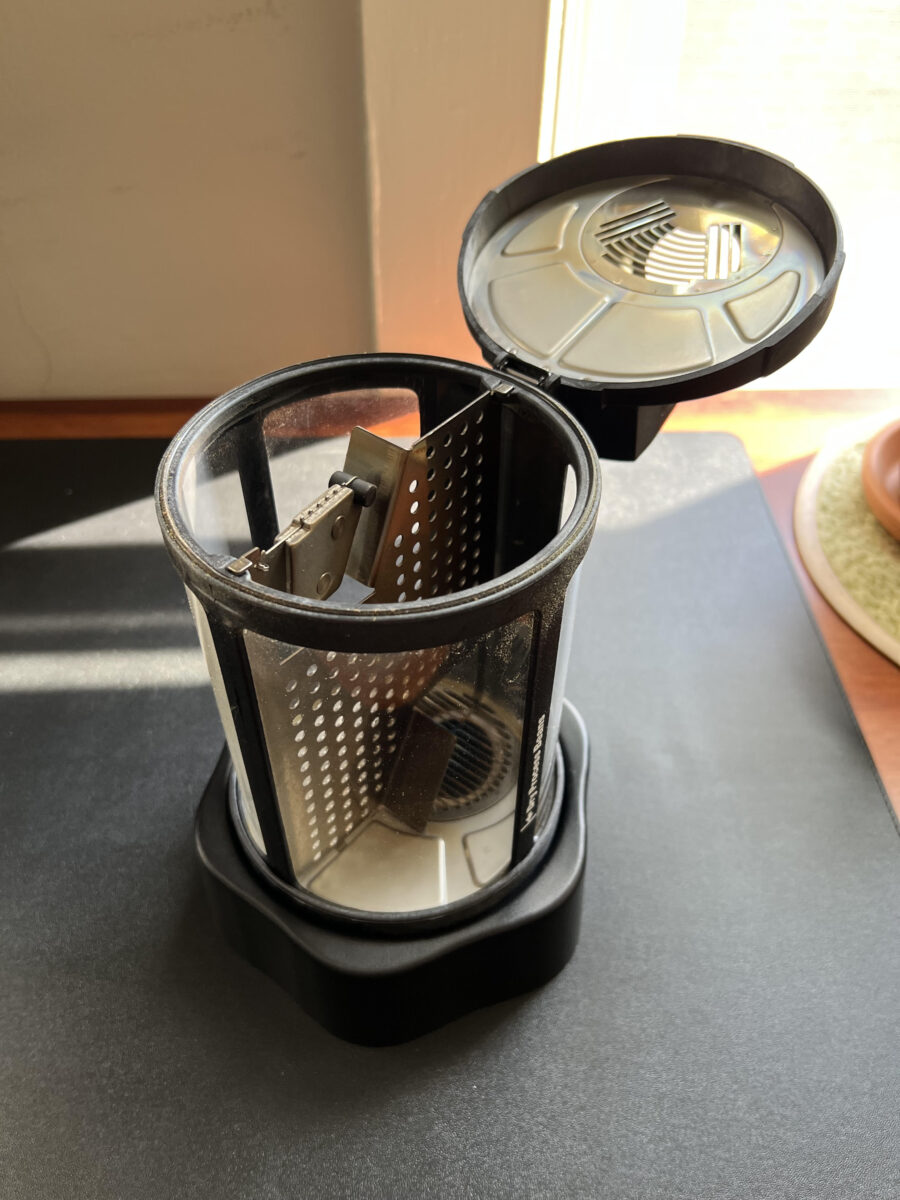
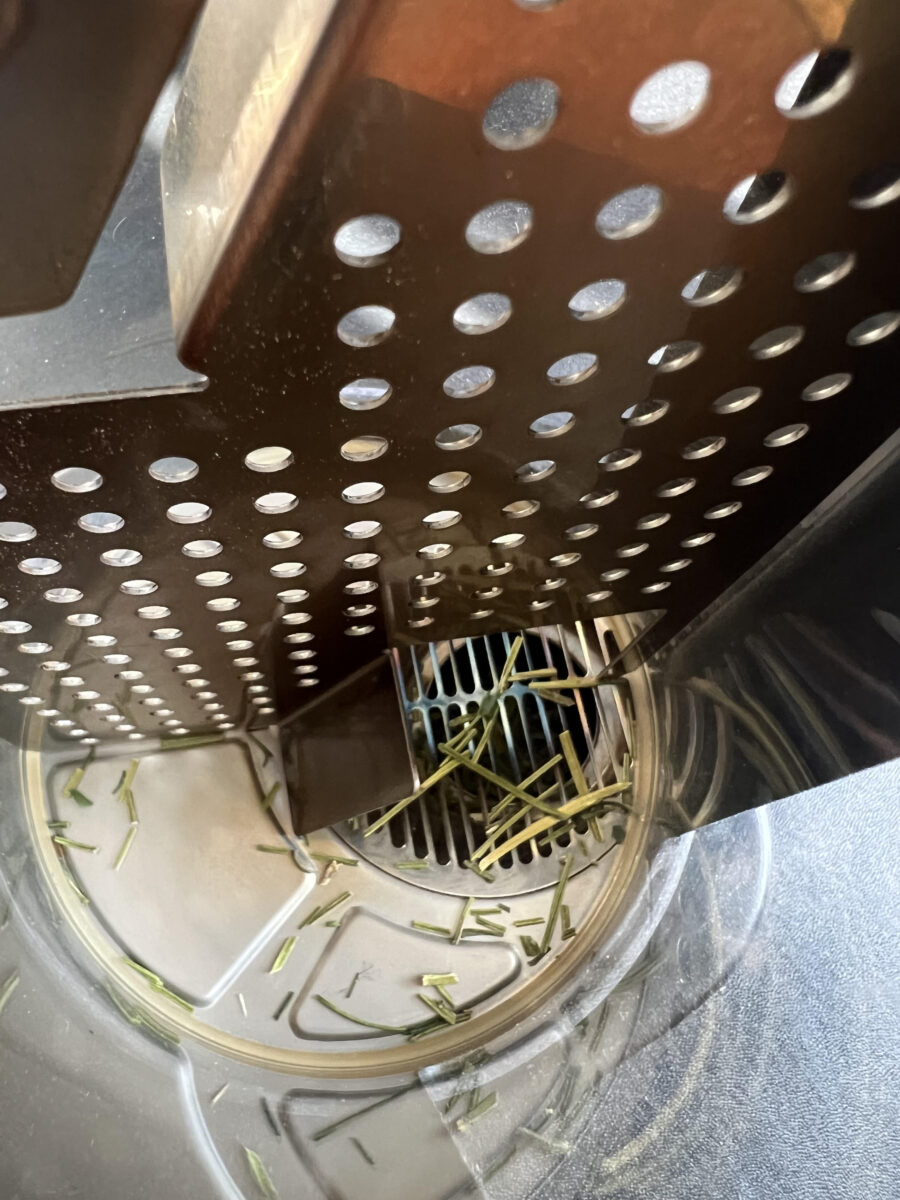
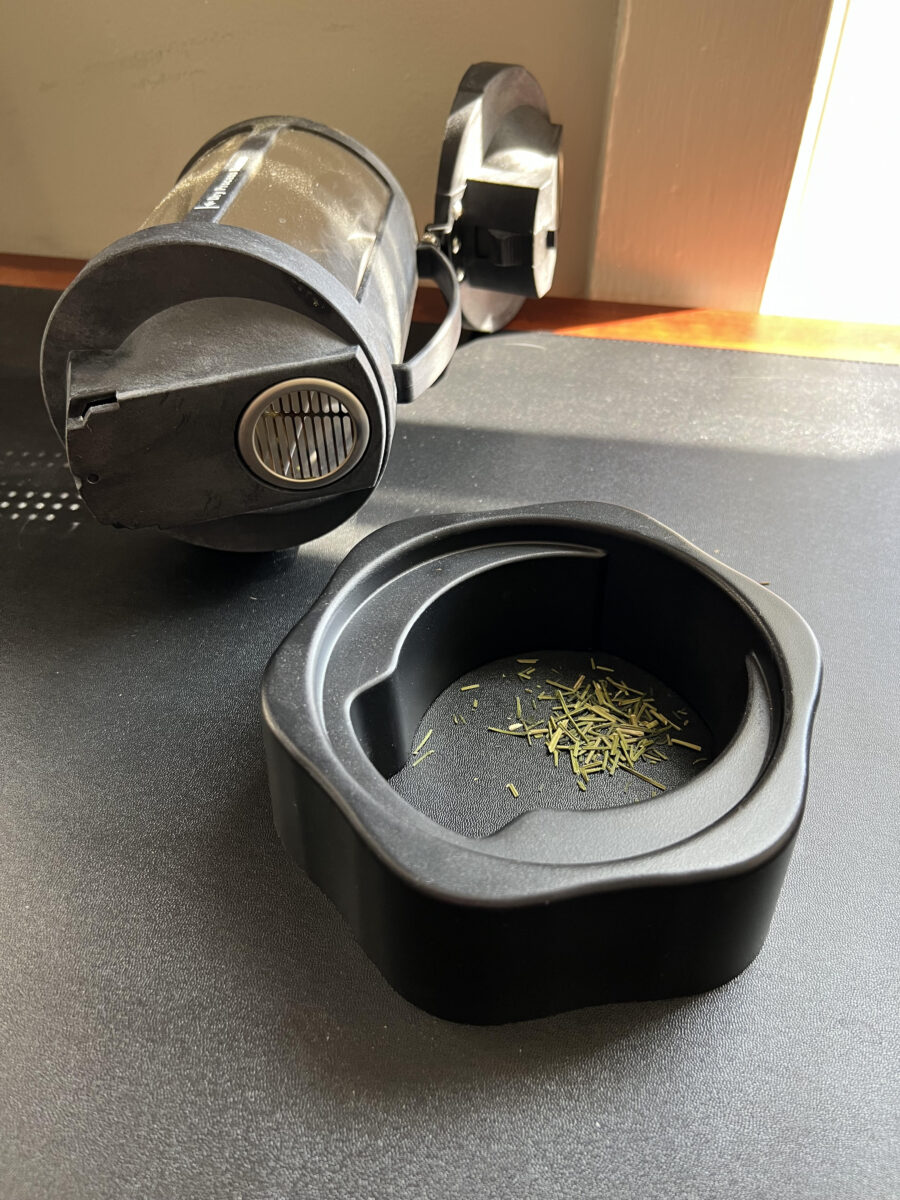
Cleaning up the mess was easy enough, but I was now pretty concerned about the role this grate and the one at its opposite end would play in this experiment. Embarrassingly, it’s something I hadn’t given much thought prior to this moment. At this point, I was positive that some percentage leaves would inevitably pass through the outlet grate and migrate into the chaffChaff is paper-like skin that comes off the coffee in the roasting process. Chaff from roasting is part of the innermost skin (the silverskin) of the coffee fruit... ...more collector. I didn’t really have a solution, but I thought that dropping the batch size from 200g to 100g would help somehow. I had to hold the drum at a weird angle to load the tea leaves, but I managed to get them in without spilling. Taking this small win for what it was worth, I made the decision to press forward.
The Roast
I knew from my talks with Lisa that a gradual heat application would be ideal, but I was also aware of the heating limitations with the Gene Cafe. Essentially, there aren’t any heat levels on this roaster. You just set a target temperature, the roaster will apply heat until that temperature is reached, and then it will cycle the heating coil off an on to maintain that set temperature (+/- 15 degrees). The important bit is that the heating coil is only ever on or off—There’s no in between. When I roast coffee, I generally set the target temp as high as it will go, and I rarely make any more adjustments. Even at this max setting, I usually see total roast times of 10-12 minutes for City to City+City+ roast is an ideal roast level that occurs roughly between 425 and 435 degrees Fahrenheit in many coffee roasters with a responsive bean probe where First Crack... ...more. I wanted to aim for a similar time frame with this roast, so I just set the target to max (482 F). My plan was too just see what would happen. If things progressed too quickly, I figured I could always drop the target and extend the roast.
0:00 – Start of roast
3:00 / 300F – Up to this point in the roast, my eyes were glued to the tea leaves in the chamber. I was very paranoid about starting a fire, and I wanted to make sure I could spot any sparks before things got out of control. When I wasn’t so focused on this, I was looking to see if any leaves were escaping through the exhaust grate. Some were definitely getting past, but it didn’t look like it was a significant amount.
4:30 / 360F – Tea leaves dulling in color. I noticed a faint smell of roasted nuts and caramelized sugar filling the room. Temperature was progressing faster than I wanted, so I dropped the target down to 382 F to buy some time.
7:00 / 382F – Colors shifting to a light brown. Roasting aromas intensifying.
8:00 / 382F – Deepening brown color. Comforting scent of toasted barley.
10:00 / 382F – End of roast & cooling
I wasn’t confident that ending the roast when I did was the right move, but I didn’t really have much else to go off of. The color looked right, and I wanted to avoid burning the batch as best I could. Plus, I knew there would be a bit of coasting during the Gene Cafe’s cooling cycle, so better too light than too dark.
The Aftermath
With the roast now being complete, the first thing on my mind was logging the roasted weight of my batch. I emptied the Houjicha into a tray on my scale to measure, and to my surprise the reading showed just 48g. That was less than half of what I started with, and while I had expected some weight loss, I definitely wasn’t anticipating this much. It was also dawning on me that the volume of the roasted tea seemed awfully small compared to how it looked pre-roast.
I could already sense that the chaff collector was pretty full from the moment I removed it from the bodyAssociated with and sensed by mouthfeel, body is sense of weight and thickness of the brew, caused by the percentage of soluble solids in the cup, including all... ...more of the Gene Cafe. I removed the cap, tilted the collector, and out spilled a multi-colored assortment of tea leaves forming a pile on my desk. It was blend of un-roasted, semi-roasted, and fully roasted tea leaves, all of which must have accumulated slowly over the course of the roasting session. When I weighed the pile, the scale read 43g. Close to half of my total batch passed through the exhaust grate and made its way into the chaff collector.
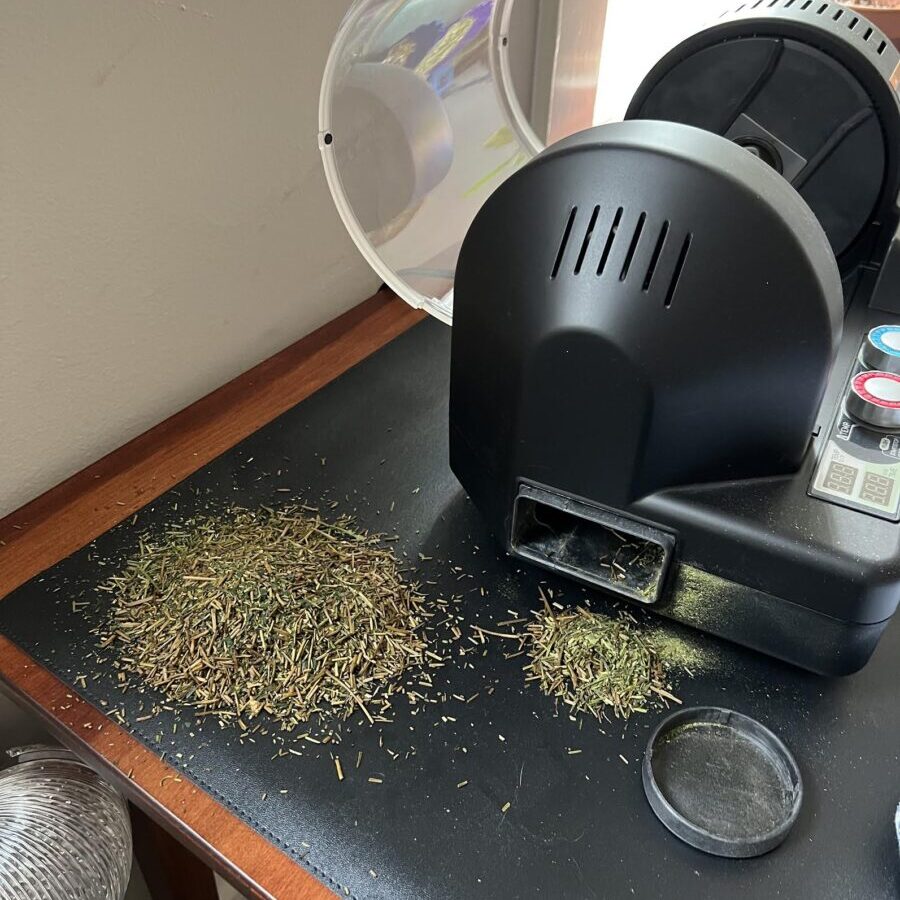
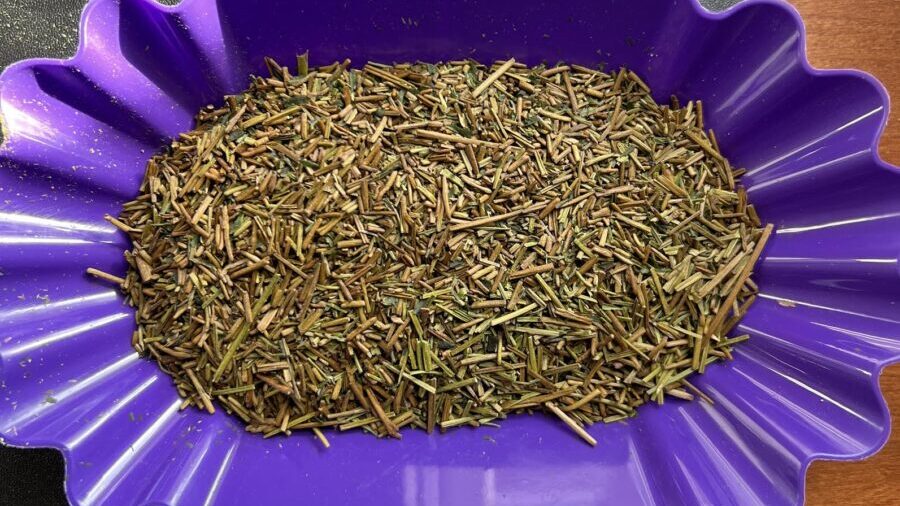
The answer was clear to me at this point. Can the Gene Cafe roast tea leaves? Sure—Yes, it technically can. I completed a roast, and I did get something brew-able out of it. It’s not really a good idea, though, and I knew for sure that I couldn’t recommend the Gene Cafe to Lisa. Ultimately, it was more trouble than it was worth, and having to sacrifice half of your batch each roast is a dealbreaker to say the least. That’s not even considering what could have gone wrong. For all I know, I was lucky I didn’t start a fire. Not taking that chance again!
Okay… but how did it taste?
Oh, it was pretty okay! The brewed tea has a very bittersweet flavor profileFlavor Profile implies a graphical impression of a particular coffee, whether it be an artistic portrait or data graph of the perception of flavor compounds. In the case... ...more. I was mainly picking up on notes of toasted nuts, tamarind, and barley tea. It had a syrupy quality to the body as well that gave it some heft. Quite the contrast to what I’m used to with green tea, and not something I’d necessarily drink for refreshment. I can see this being appealing as an after-dinner drink for those wanting a warm and comforting sort of palate cleanser.
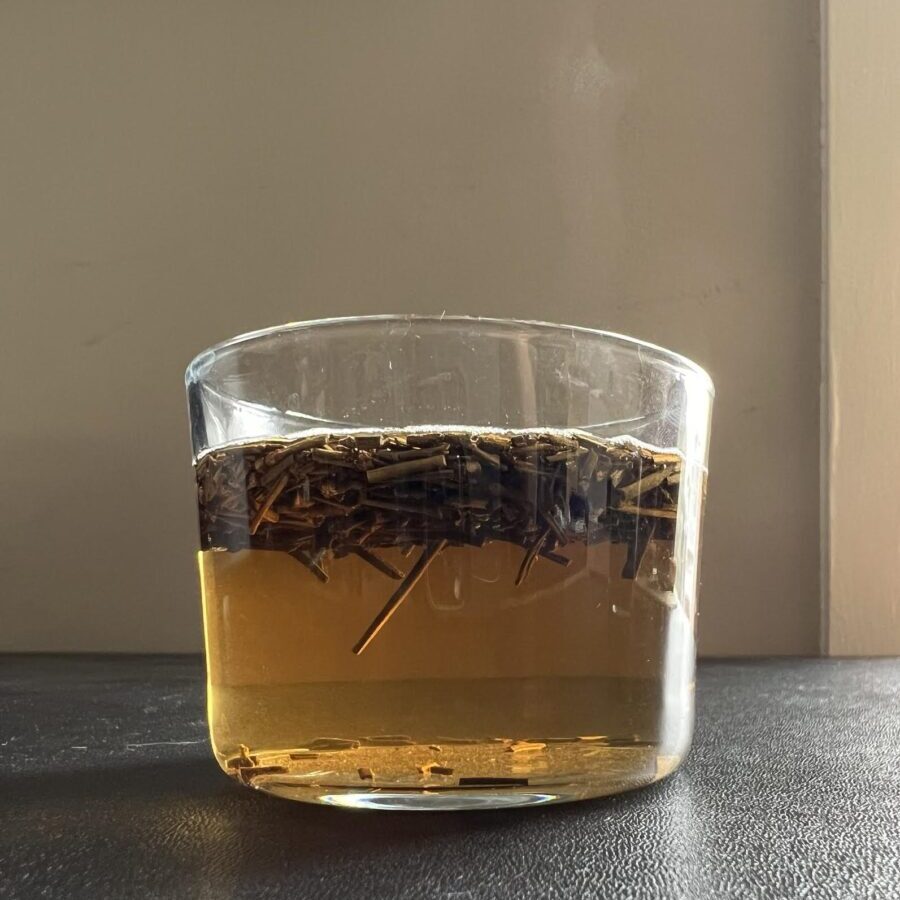
I think I’m still more of a regular green tea kind of guy. Who knows, though—I can’t even say for sure whether or not I roasted this all that well! I do plan on brewing what I have left, and maybe it’ll turn into a nightly ritual. I’ll just let someone else do the roasting for me next time.


11 Responses
Cutting a copper or stainless screen to fit both the inlet and outlet of the Gene Cafe drum might be worth trying if you decide to try it again!
Hey Stephen. That’s a good suggestion, especially for folks who are solely interested in roasting tea (can’t imagine it’d work too well for swapping between coffee and tea). Reminds me of some Gene Cafe owners I’ve seen who have lined the interior walls of the drum with mesh grill mats. Apparently it helps to cut down on the sounds produced when the beans roll/collide against the glass, and the grill mat material can withstand the intense heat. Anyway, could potentially serve as a good option for what you’re suggesting!
-Erik
My thoughts exactly! Maybe something like a french press screen repurposed? I also like the grill mat piece idea.
Interesting experiment! A little complicated though, for the task. I’m pretty sure the usual way of home roasting small batches of tea is to just toss it in a wok as it heats up until it reaches the desired level of roast. The origin story I heard about hojicha is that some teahouse owner in Japan got stuck with a batch of stale bancha and didn’t have the money to replace it, so as a desperate measure he tried roasting it… thus an international sensation was born.
Hey Jeremy. Oh yeah, that sounds quite a bit easier. I’d actually be curious how a high-conduction roast style like that would influence the flavor profile compared to a more convection oriented roast (like what the Gene Cafe offers). Have to imagine roasting in a wok would introduce a bit of smokiness (wok hei!) and would potentially deepen the caramel and bittersweet notes. Hojicha is still a very new thing for me, so I wasn’t aware of that origin story! Funny how so many of our favorite things in life are the results of accidents or impromptu experiments.
-Erik
Hey Erik…
You mention folks using grill mats in their Gene Cafe roaster. What I’m finding in various word searches is all ‘non-stick’. Is that your reference or is the product something else? I ‘something else’, and you can make the time for it, would you link me, please?
Mike
Hey Mike. Thanks for the question. Truthfully, I don’t know a ton about the specifics of the grill mats being used for this purpose, so I’m going to refrain from providing any product links. The extent of my knowledge goes as far as posts I’ve seen on online forums (if you Google “mesh grill mat gene cafe”, you’ll see a bunch of them come up). It does seem like most people are using mats that advertise being non-stick, but I’d suggest being careful to only consider options that are FDA approved or food safe. Some of the mats that I’ve seen people recommend aren’t exactly transparent with this information, which makes me a little uneasy about the whole thing!
-Erik
Ah, why didn’t I think of that? =] Thank you for the nice pointing job, Erik
Mike
I have had three Gene Cafes over the last 15 years, so I have some ideas:
1. Since you know that over 10 minutes, you are going to have half blown into the chaff collector (sounds like a Grade 4 story problem), you might get a much more consistent roast overall if you drop the initial temp, try the roast extending moves we learned from TO, and plan on dividing roasting time to allow for returning the collected tea to the chamber at least once. Maybe treat the chaff collector as a feature instead of a bug in this problem. It might take longer, but you might get a more consistent product in the end.
2. I don’t turn the temp up all the way to roast coffee—usually no higher than 440F. Tea in Kenya is the only place I’ve seen it processed from green leaf to fully oxidized. They certainly were not using anywhere near that temperature to “cure” (roast) tea. The temp was under 300F—probably closer to 200F and they said it took a day or so with periodic stirring to bring it all to a consistent finish, but they had killer humidity to deal with there. The material you are roasting has much less density than green coffee beans or cacao nibs, so I think you need to adjust for that. If you put the Gene somewhere near the lower end of the temp scale and make sure to periodically return the partially-roasted to the main chamber, it might return a decent result.
Somebody try this and let me know.
Hey Susan. I like the idea of a slower heat application. I admit, I probably should have set my target temp far lower than max! It would be fun to experiment with lower temps, and I wouldn’t be surprised if the tea’s flavor profile improved as a result. Recycling the tea from the chaff collector for a second round of roasting is an interesting thought, but if I were to re-do this experiment I’d prefer to focus more on minimizing the loss to the chaff collector. I also can’t ignore the thought that I’d possibly be increasing the chances of a fire by re-roasting. Maybe that’s not true, but that’s where my mind goes!
-Erik
Fahrenheit 451… dry grass is a higher temp but I don’t find consensus.