
By Thompson Owen and Christopher Schooley, originally published 6/4/13
Updated 4/3/2026
A lot has happened since this article was published 6 years ago, though we think Chris’s roasting comments hold up well, and we still tend to follow his original recommendations below. Learn more about the originIn coffee talk, it refers to a coffee-producing region or country; such as, "I was just at origin." Of course "Origin" for most product we use is not... ...more and our process of buying coffee in our Coffee Basics article on Rwanda & Burundi.
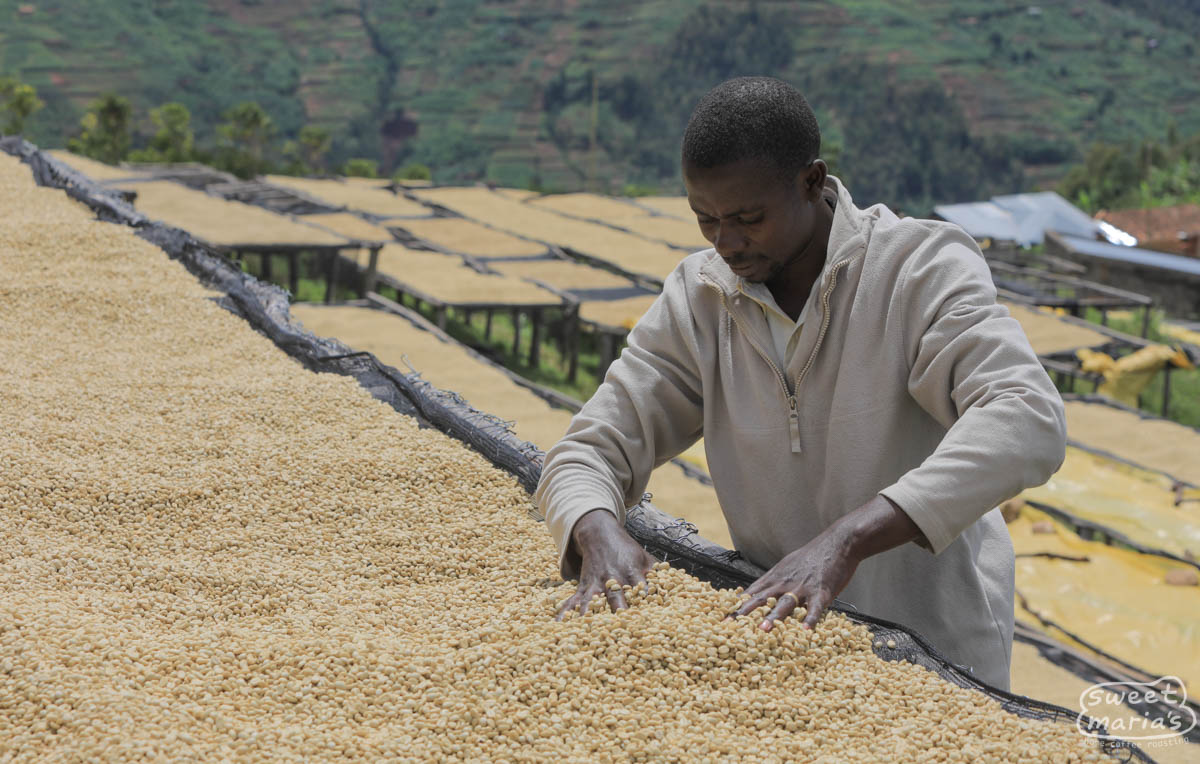
The coffees of RwandaA Bourbon cultivar variant from Rwanda and Burundi. Bourbon coffees are named for the island in the India Ocean where French colonists grew it. Some history from the... ...more and BurundiBurundi coffee bears resemblance to neighboring Rwanda, in both cup character, but also the culture surrounding coffee. Burundi is a small landlocked country at the crossroads of East... ...more have a lot going for them in terms of roasting. For starters, their bourbonA coffee cultivar; a cross between Typica and Bourbon, originally grown in Brazil: Mundo Novo is a commercial coffee cultivar; a natural hybrid between "Sumatra" and Red Bourbon,... ...more pedigrees grown at high altitudes lend to a crispUsually used as a modifying flavor term, such as "crisp acidity" : Crisp can have several meanings, since it modifies other flavor terms. Crisp acidity might mean bracing,... ...more yet balanced brightnessA euphemistic term we use often to describe acidity in coffee. A bright coffee has more high, acidic notes. : A euphemistic term to describe acidity in coffee.... ...more and long sustained sweetnessSweetness is an important positive quality in fine coffees, and is one of five basic tastes: Sour, Sweet, Salty, Bitter, Savory (Umami). In coffee, sweetness is a highly... ...more. But we all know that the best qualities of any coffee are latent and not intrinsic and can take a good deal of effort to ensure that those qualities be front and center. I love to put these coffees next to bourbons from Central America and look at how similar yet varied they are side by side. Roasting wise, they are extremely similar in how they take the heat, but I feel like the Rwanda and Burundis benefit the most from some specific roast profiles.
Burundi has really come a long way in recent years in terms of selection and processingThe removal of the cherry and parchment from the coffee seed.: Coffee is either wet-processed (also called washed or wet-milled) or dry-processed (also called wild, natural or natural... ...more. For years, the Burundi coffees that were available still had a good deal of rusticA general characterization of pleasantly "natural" flavors, less sophisticated and less refined, but appealing. : What is Rustic? This is a general term we came up with... Dried... ...more qualities to them. You could get a sweet raisiny or fig like fruitedness out of them but there was still a mineral-like thread in the coffee. With the honeyIn coffee, honey-like sweetness is often found, but we use terms such as refined honey (highly filtered and processed) as opposed to raw honey rustic honey sweetness. This... ...more sweetness this mineral character could be a pleasantly complexThe co-presence of many aroma and flavor attributes, with multiple layers. A general impression of a coffee, similar to judgments such as "balanced" or "structured" ...more element, but as recent offerings have shown us in Burundi, these coffees more and more tend to be crystal clear. The best coffees from the last few harvests have had brilliant acidityAcidity is a positive flavor attribute in coffee, also referred to as brightness or liveliness. It adds a brilliance to the cup, whereas low acid coffees can seem... ...more with a more spiced thread rather than mineral, and even floralFloral notes in coffee exemplify the connection between taste and smell. Describing the taste of a specific flower is near impossible...we always default to “it tastes like it... ...more cup character. Instead of tasting rustic, the coffees are crisp and tea-likeA term used to describe coffees with light, tannic, slighly astringent mouthfeel and tea aromatics. We find it in some Rwandan flavor profiles, among others. ...more.
As Tom mentions in talking about the history of coffee in Rwanda, specialty coffeeSpecialty coffee was a term devised to mean higher levels of green coffee quality than average "industrial coffee" or "commercial coffee". At this point, the term is of... ...more production has greatly benefited from aid programs that focused intently on quality instead of quantity, pushing the value of these coffees. Really special coffees from Rwanda can be juicy and fruitedIn some coffee taster’s lexicon, “fruity” means the coffee is tainted with fruit, and “fruited” means a coffee is graced by positive fruit notes. We don't exactly see... ...more, berry and citrus notes, with even the floral qualities taking on an orangeOrange aromatics and flavors are prized in coffee, whether they take the form of sweet orange flesh and pulp, or orange peel. Orange flavors or aromatics can range... ...more blossom or raw honey characteristics. The sweetness can be refined, raw sugars, honey or bittersweetBittersweet is from the language of chocolate, and describes the co-presence of positive bittering compounds balanced by sweetness. It is directly related to caramelization, but has inputs from... ...more oriented.
Rwanda is the coffee that I used for my Stretchin’ Out the Roast articles because of its clean yet dynamic character and because of the ability of the beans to really take the roast. These coffees can take a range of roasts but some of their nicer qualities really benefit most from a quick City roastCity roast is what we define as the earliest palatable stage that the roast process can be stopped and result in good quality coffee. City roast occurs roughly... ...more; they’re high grownHigh Grown, or HG, is a coffee designation that can mean different things in different countries. : High Grown, or HG, is the highest quality Mexican coffee designation... ...more, extremely dense bourbon coffee, and they can take the heat. You can push these coffees up into Full City and get sweet balanced flavor profiles. But truly these coffees shine at a lighter roast and the malic, sweet citric, and tartaric qualities really pop.
Look for a vigorous 1st crackAn audible popping sound heard during roasting. In coffee, one refers to "first crack" and "second crack," which come from two different classes of chemical reactions.: An audible... ...more and push it through. Take your foot off the gas and let it have a definitive end to 1st crack, but don’t pull back too early and let it sputter through the crack. Giving yourself about 15-30 seconds from the end of the crack will put you squarely in that City, City+City+ roast is an ideal roast level that occurs roughly between 425 and 435 degrees Fahrenheit in many coffee roasters with a responsive bean probe where First Crack... ...more range as long as you’ve pulled back on the roast either through reducing gas or changing the airflow depending on your roaster model.
You can stretch the drying stage in these coffees, and I did get a longer juicier finishSimilar to aftertaste, but it refers to the impression as the coffee leaves the palate. Aftertaste is the sensations gathered after the coffee has left the mouth. We... ...more in the Burundi which was very pleasant, but didn’t quite have the sweet pop of the white grape. I would say that if you are looking to pull SO espressoShort for Single Origin espresso, meaning using one origin specific coffee to make espresso, as opposed to using a blended coffee. ...more with either of these coffees, a stretched drying stage would be a smart move. In the Rwandan coffees the stretching produces a more syrupy than juicy mouthfeelHow a coffee feels in the mouth or its apparent texture, a tactile sensation : A major component in the flavor profile of a coffee, it is a... ...more, a little more weighted than the Burundis, and with a candy-like sweetness that lingers long into the finish. The sweetness and mouthfeel are certainly nice, but the sweet citrus/orange note is not as prominent and the floral notes can be more muted.
Honestly, some of my favorite brews and espressoA small coffee beverage, about 20 ml, prepared on an espresso machine where pressurized hot water extracted through compressed coffee.: In its most stripped-down, basic form, this is... ...more I had were 50/50 blends that I did of my quicker roasts with the roasts that I stretched the drying stage out with, getting the most from the crisp clean acid sparkling in the juicy mouthfeel. This is obviously a rather labor intensive consideration from a production perspective, but it could be a really interesting way to showcase the best of these coffees as well as have a conversation starter about what constitutes a blend and what does Single OriginSingle Origin refers to coffee from one location, in contrast to blended coffee. This term is particularly useful in discussing espresso, since most commercial espressos are made from... ...more mean.