

October, 2009 Update
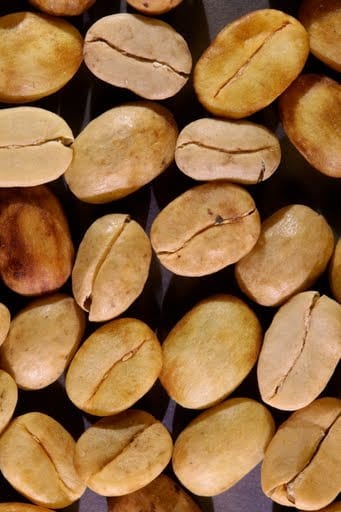
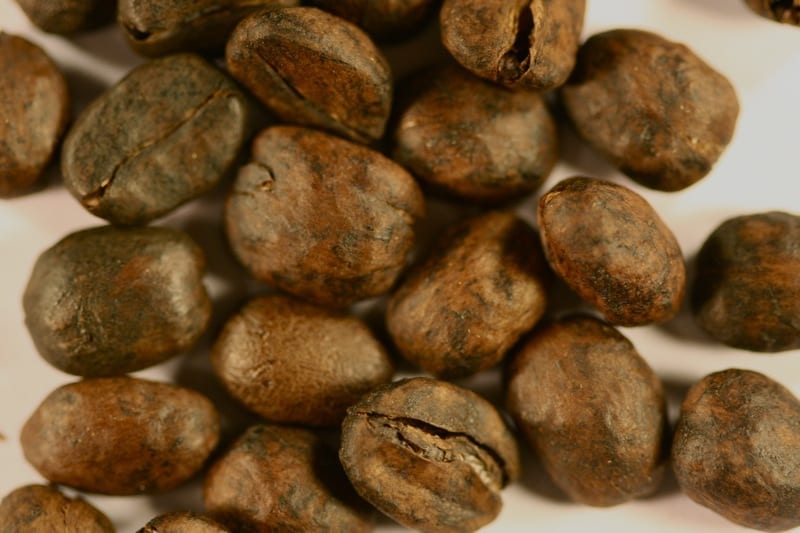
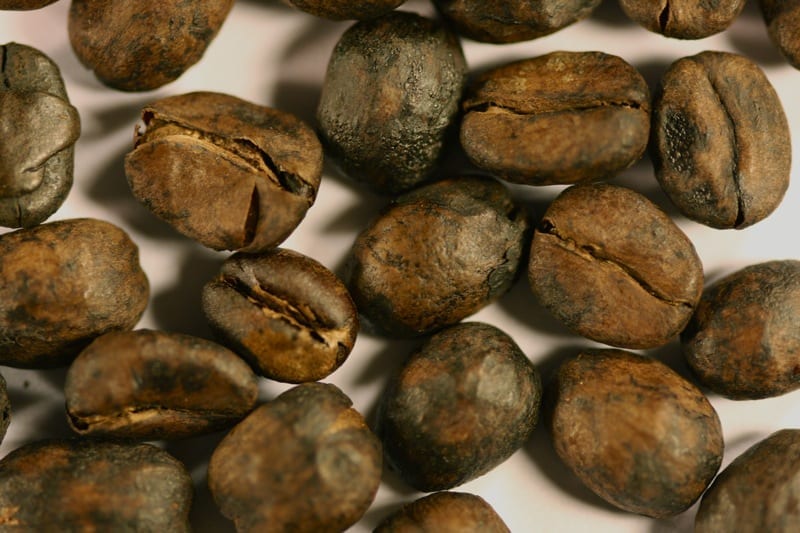
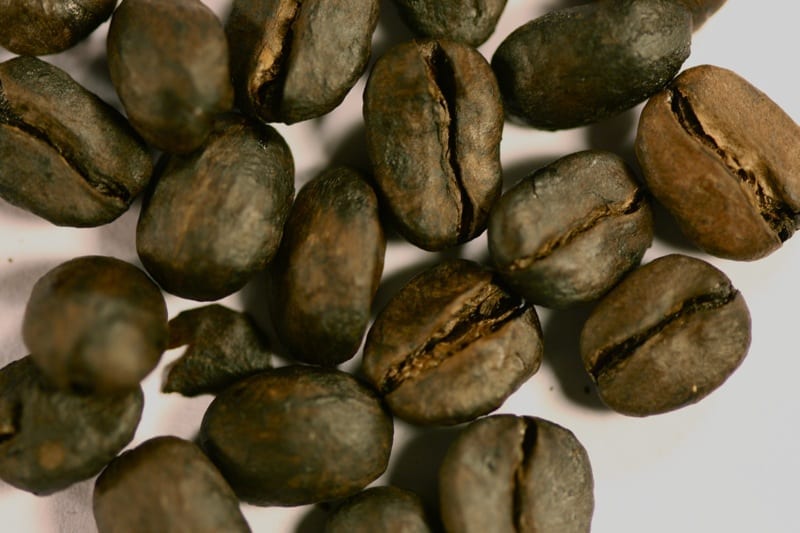
This year’s batch of R.I.P. coffee is in. Overall, we think the cup quality is improved over last year: incredible bodyAssociated with and sensed by mouthfeel, body is sense of weight and thickness of the brew, caused by the percentage of soluble solids in the cup, including all... ...more, with a really unique flavor profileFlavor Profile implies a graphical impression of a particular coffee, whether it be an artistic portrait or data graph of the perception of flavor compounds. In the case... ...more. This year’s batch roasts quite differently from last year’s, as illustrated below:
 |
 |
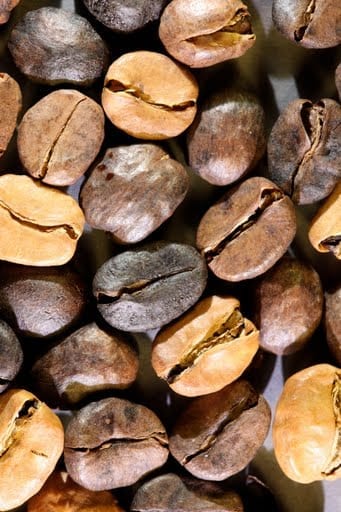 |
| RIP Coffee 2009, Unroasted | RIP Coffee 2009, Roasted to Full City. Note the extremely uneven color of the parchmentGreen coffee still in its outer shell, before dry-milling, is called Parchment coffee (pergamino). In the wet process, coffee is peeled, fermented, washed and then ready for drying... ...more. | Another shot of a full city roastA coffee that has been roasted to the brink of second crack.: A coffee that has been roasted to the brink of second crack. The internal bean temperature... ...more of the 2009 RIP Coffee. |
RIP Coffee Tutorial
|
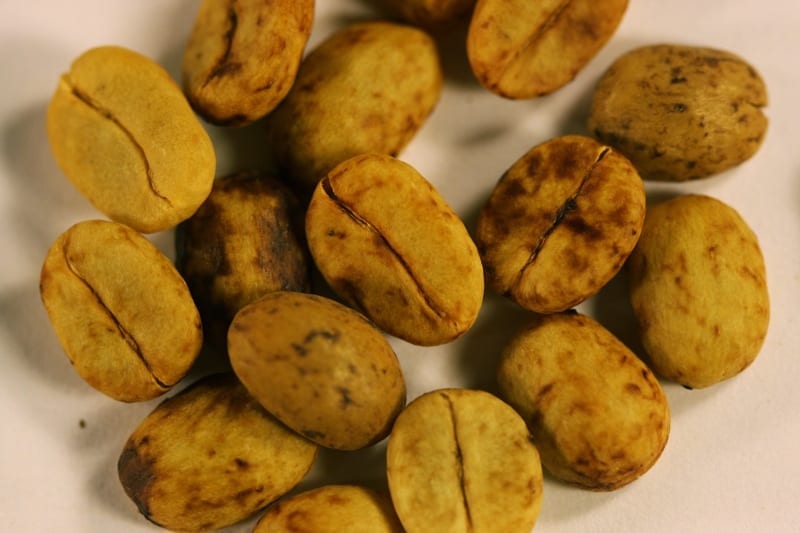
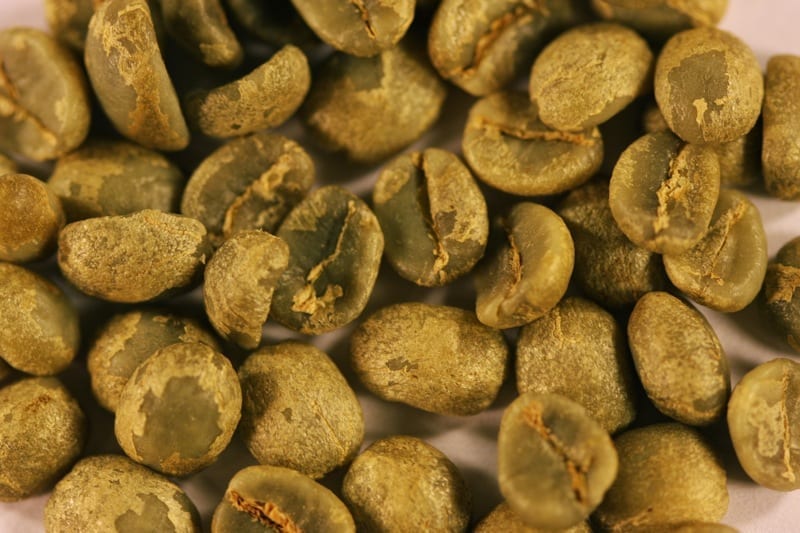
Okay, this is about as wacky as it gets; roasting coffee in it’s parchment shell, grinding it up, parchment and all, and brewing it. But we tried it and it’s a unique cup, with extra body, and unusual cocoa and woodyGenerally a taste defect from age; old green coffee, perhaps yellowing in color. This is due to the drying out of the coffee over time, and as the... ...more flavors. RIP coffee is a name we came up with for “Roasted In Parchment,” which is a another of our crackpot ideas. But the logic is all there: After coffee is processed at the wet millThe wet mill is a processing center where coffee cherry from the tree is brought for initial processing.: The wet mill goes by many names (Beneficio, Factory, Washing... ...more or the pulpingThe first step in processing wet-process coffee, pulp natural or forced demucilage coffees. Pulping simply refers to removing the skins from the coffee fruit, leaving the parchment coffee... ...more station, it is dried in the sun. At this stage the coffee has it’s outer parchment shell on it; it is called pergamino in Central America at this stage. After it is sun-dried down to 12% moisture content, the parchment coffee is rested in silos or bags for anywhere from 30-60 days. This allows the coffee to stabilize. In it’s parchment shell, the dried green coffeeGreen coffee refers to the processed seed of the coffee tree fruit. Coffee is a flowering shrub that produces fruit. The seeds of the fruit are processed, roasted,... ...more can be stored for much longer, and is more protected from temperature and humidity changes that damage cup quality. I had toyed with the idea years ago of importing coffee in parchment, and milling it here. You can store it and dry millA facility that accepts dried coffee cherry and mechanically separates the coffee bean from the dried fruit and parchment layer. The facility can be highly mechanized, as in... ...more it right before shipping it to the customer. The logistics never made sense, and milling is expensive and dusty. Some time last year I was in my cuppingCupping is a method of tasting coffee by steeping grounds in separate cups for discrete amounts of ground coffee, to reveal good flavors and defects to their fullest.... ...more room and on a whim I started roasting some samples I had of parchment coffee. I remember seeing women in rural GuatemalaGuatemalan coffee is considered a top quality coffee producer in Central America. Due to our proximity to Guatemala, some of the nicest coffees from this origin come to... ...more roasting parchment coffee on a wood stove. What would happen? I was really surprised by the cup. It was very different, not at all unpleasant. There was tons of body, an unusual maple syrup and cocoa powder taste. It seemed like I had blended coffeeA blend is a mixture of coffees from multiple origins. Coffees are typically blended to produce a more balanced cup. A blend of roasts of different levels is... ...more with something else, but I enjoyed it! I also found that the darker roasts were my favorite. So this year while traveling in Costa RicaCosta Rican coffee is typically very clean, sweet, with lots of floral accents. hey are prized for their high notes: bright citrus or berry-like flavors in the acidity,... ...more I asked Juan Ramon at Brumas del Zurqui Micro Mill if they would ship us parchment coffee. They did, and with a twist: this isn’t wet-processed parchment coffee, it is Red HoneyThe honey process has nothing to do with honey other than the fact that they're both sticky! It's a term that became popularized in Costa Rica as another... ...more Parchment from pulped natural process. That means the fruit of the coffee cherryOriginally coffee literature referred to the fruit of the tree as a "berry" but in time it became a cherry. It is of course neither. Nor is the... ...more was left to dry on the parchment. Rather than the pale cream color of wet-processed parchment, this has a red tint to it.
|
||
|
Wet-Process Coffee Parchment |
||
|
“Red Honey” Parchment |
||
|
|
||
|
Drum Roast or Air Roast? We found that both work well for RIP coffee. In any case, DO NOT leave your roaster unattended!
|
||
|
RIP Coffee (Roasted in Parchment) City+City+ roast is an ideal roast level that occurs roughly between 425 and 435 degrees Fahrenheit in many coffee roasters with a responsive bean probe where First Crack... ...more Roast |
||
|
RIP Coffee (Roasted in Parchment) FC Roast |
||
|
RIP Coffee (Roasted in Parchment) FC++ Roast |
||
|
RIP Coffee (Roasted in Parchment) Vienna RoastVienna roast occurs at the beginning of second crack. The Vienna stage is where you begin to find origin character eclipsed by roast character.: Vienna roast occurs at... ...more |
||


 Red Honey Coffee – Herbazu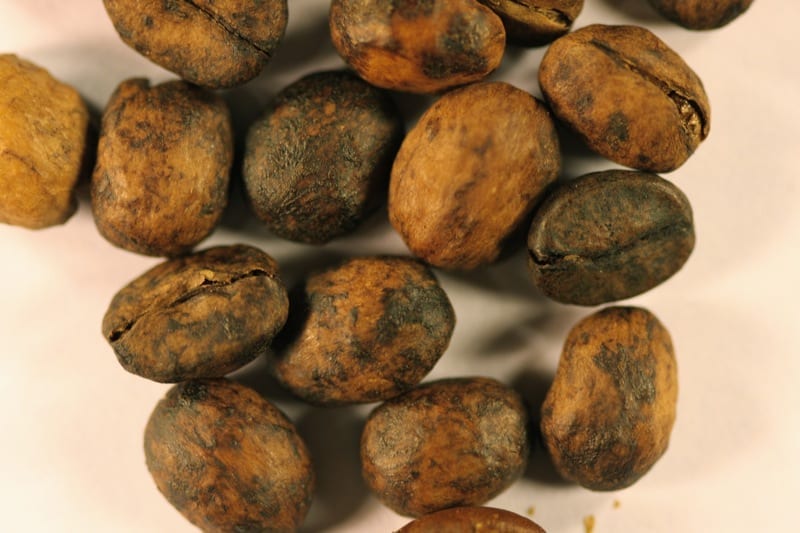
| The Coffee Library
|
Sweet Maria’s Coffee RoastingThe application of heat to green coffee seeds (beans) to create palatable material for brewing a great cup!: Coffee roasting is a chemical process induced by heat, by... ...more Tip Sheets |
|
| Sweet Maria’s Coffee BrewingThe process of making an infusion of water and roasted, ground coffee. In the most basic sense, hot water is added to coffee ground to produce a drink.... ...more Tip Sheets |
||
| Further Reading | The Complete Sweet Maria’s Coffee Library Page – Coffee Travel Pictorials, New Product Reviews, Roasting Pictorials, Etc! |
|
| Interesting Coffee and Coffee Roasting Web Sites – Links to Home Roasting Web Sites, Coffee Industry Sites, Great Coffee Books, Etc! |
||
| Coffee Book Recommendations | ||
|
Sweet Maria’s
Coffee Cupping Reviews |
Central America: Costa Rica | Guatemala | Honduras | Mexico | Nicaragua | Panama | El Salvador
Africa/Arabia: Burundi | Congo | Ethiopia | Kenya | Rwanda | Tanzania | Uganda | Zambia | Zimbabwe | Yemen
IndonesiaUSDA is (obviously) the United States Department of Agriculture. USDA also had coffee plant breeding programs in the past and one variety they distributed to Indonesia and was... ...more/Asia: Bali | India | Java | Papua New Guinea | Sumatra | Sulawesi | Timor
Islands/Blends/Others: Hawaii | Puerto Rico | Jamaica | Dominican | Chicory | Saint Helena | Sweet Maria’s Blends
|
|

This page is authored by Tom Owen and Sweet Maria’s Coffee, Inc. and is not to be copied or reproduced without permission.
|
||||||||||||||||||||||||||||||||||||